Trauma Therapy for Narcissistic Abuse Survivors
Narcissistic abuse does not arrive like a single blow. It seeps in through charm, intensity, and a drip of small humiliations that gradually rewrite what feels normal. Survivors often describe two lives running in parallel: the outer life where they hold jobs, parent, or manage a household, and the inner life where they question their memory, scan for danger, and brace for the next explosion of rage or withdrawal. By the time they reach therapy, many have lived for years in a nervous system that never gets to land.
I write as a clinician who has sat across from hundreds of survivors in weekly rooms and crisis sessions, and who has watched the same pattern play out with different details, different families, and different levels of damage. The process of repair is less about a single breakthrough and more about careful work across months, sometimes a year or more, that rebuilds the simplest capacities: to know what you feel, to name reality, to say no, and to rest without guilt.
What narcissistic abuse does to the mind and body
The hallmark injuries are not bruises, although those can be present too. You see confusion, a stunning amount of self-blame, and a collapse of trust in perception. Gaslighting erodes memory confidence. Intermittent reinforcement, the oscillation between affection and cruelty, trains the nervous system to chase crumbs. Financial control and social isolation tighten the trap. Many clients meet criteria for complex trauma, even when they hesitate to use the word abuse.
Physiologically, I expect to see sleep disruption, stomach pain, headaches, jaw clenching, and chronic muscle tension. Cortisol and adrenaline patterns become dysregulated. In session, the body often tells the story before words do: shoulders inch toward the ears when recalling an argument, eyes dart to the door when describing a silent treatment that lasted ten days.
One client, a senior project manager in her 40s, came in with impeccable spreadsheets for everything except her own life. Her partner tracked every dollar she spent, criticized her tone, and threatened to leak private photos if she left. She could articulate the absurdity of it and still felt convinced she had caused it. That split is what trauma therapy meets first.
Why trauma therapy is different from general talk therapy
General supportive counseling can be soothing in the moment, but it rarely reorganizes a dysregulated nervous system or repairs an attachment template built on fear. Trauma therapy is structured to respect physiology and pacing. Safety is not a philosophical stance, it is a treatment intervention. In practice, that means we titrate exposure to memories, monitor arousal, build skills first, and only then process.
Sessions are designed around the window of tolerance, the zone where a person can recall painful material without flipping into shutdown or panic. When work stays inside that window, new learning can occur. Outside of it, we risk retraumatization. Twelve sessions of trauma therapy done skillfully can accomplish more than a year of conversations that circle the pain without touching it or, worse, trigger it without containment.
The first stage: stabilization is treatment
Leaving a narcissistic relationship or setting boundaries within one requires more than insight. It asks for practical safety and a plan. I treat safety, stabilization, and resourcing as the first phase of trauma therapy. That includes assessing for physical danger, financial vulnerability, and legal risk, then building a network of support that is not entirely dependent on the therapist.
Stabilization rarely looks glamorous. It is learning to eat again, to sleep through the night for more than four hours, to stop checking the phone every eight minutes. It is a client downloading a password manager and reclaiming their accounts. It is pausing before replying to a 2 a.m. Text and remembering that urgency is a tactic. No one heals while the fire is still burning.
From a clinical standpoint, this stage might involve simple breathing protocols, grounding sequences that can be done discreetly in a restroom stall, and scheduled micro-practices that keep the system from spiraling. For some, a primary care visit to evaluate thyroid, anemia, or perimenopause is part of treatment. Trauma therapy does not happen in a vacuum, and bodies need tending.
Somatic therapy: repairing the nervous system from the bottom up
Somatic therapy is not about reliving events in cinematic detail. It tracks present-moment sensations and helps the body complete truncated survival responses. A classic example: during a verbal assault the body wanted to push away or run, but it froze. Over years, that unspent impulse lingers as tension, pain, or a reflexive collapse in conflict.
In practice, I might invite a client to notice their feet on the ground, then the length of the exhale. We will map where anxiety sits, where a sliver of calm appears, and allow small pendulations between the two. If the jaw clenches when recalling the accusation that they are selfish, we might experiment with gentle opening and closing, paired with the thought I can hold my own ground. Sessions often include tracking the start and stop of activation, waiting for settling signs like a spontaneous sigh or shoulders dropping an inch.
Two cautions apply. First, strong dissociation requires even more titration. Pushing too fast can create a backlash that looks like symptom flare, self-harm urges, or numbing. Second, clients raised in hypercritical homes often feel shame about any focus on the body. That shame is part of the work. We name it, we work slowly, and we do not turn the session into another performance.
Attachment therapy: rebuilding trust in connection
Attachment therapy addresses the deeper template of how we expect relationships to function. Survivors of narcissistic abuse often learned that love must be earned through service, silence, or performance. They took on roles, usually the caretaker or hero, because it made the relationship work just enough to survive. Attachment therapy invites a new experience: consistency without manipulation, boundaries without punishment, and repair after rupture.
In treatment, that looks like tolerating being cared for, noticing the reflex to reject help, and experimenting with secure behaviors that once felt dangerous. A client who was punished for crying learns to ask for comfort and receive it without apology. Someone who managed conflict by intellectualizing practices saying I feel hurt instead of I think you misunderstood me. These are small moments, but over dozens of repetitions they update the model of what intimacy can be.
I sometimes coordinate with couples therapists when survivors choose to remain in a relationship that is not overtly abusive but carries patterns that echo narcissistic dynamics. The goal is not to pathologize a partner, it is to reinforce healthy relating: explicit agreements, mutual accountability, and respect for boundaries. When the partner cannot or will not meet that standard, attachment work shifts toward strengthening the client’s capacity to leave or limit contact.
Grief counseling for what was promised but never given
Grief counseling is essential in this population, because the loss is ambiguous. You are mourning a person who may still be living, and also mourning the fantasy that one day they would change. Clients grieve the time spent, the opportunities missed, friendships dropped to keep the peace, and even the parts of themselves they muted to survive.
I schedule dedicated grief sessions when possible. We might create a timeline of the relationship with markers for idealized highs and abusive lows, then sit with the reality that the highs were bait, not love. Rituals can help: writing the unsent letter, deleting photos on a chosen date, or returning reclaimed items to their rightful place in the home. There is no one right way, but grief that is honored tends to move, while grief that is minimized tends to calcify into depression or cynicism.
A measurable shift often happens around week 12 to https://spiralsandheartspacehealing.com/consultation 16 of consistent therapy. The client no longer searches for a Hollywood ending. They begin to talk about this season as a chapter, not an identity. That is grief doing its quiet work.
Movement therapy: letting the body say what words cannot
When talk falls short, movement therapy can bypass intellectual defenses and give the body a vocabulary. This does not require a dance background. It can be as simple as ten minutes of guided movement at the start of a session, or a structured class outside therapy where trauma-informed instructors provide options rather than commands.
For survivors accustomed to having every gesture monitored or mocked, learning to inhabit space is radical. I have seen clients discover anger through the solidity of a lunge, find ambivalence in a twisting sequence, or feel genuine joy when their arms finally reach overhead without fear of being told they are too much. In a practical sense, movement therapy also helps with sleep and digestion, which support all other therapeutic gains.
When choosing a program, look for professionals who understand trauma physiology. Phrases like go at your own pace and check in with your breath are good signs. Avoid instructors who shame or push through pain. The aim is agency, not performance.

How we process trauma memories and future triggers
Once stabilization is in place and the body can regulate within a reasonable window, we turn toward processing. The method depends on the person. Eye Movement Desensitization and Reprocessing can be powerful for specific incidents like a smear campaign at work or a night of threats. Parts-oriented models, such as Internal Family Systems, are well suited for the chronic nature of narcissistic harm, where an inner critic learned to mimic the abuser and a young part holds fear or longing.
The trap is to make processing a race. It is better to resolve two or three keystone memories thoroughly than to skim twenty. I often select memories that function like hubs: the first time the client doubted their reality, the moment they decided to stop sharing achievements to avoid envy, the day they signed over financial control. When those change, the network of associated beliefs shifts too.
We also rehearse the future. Narcissistic abusers rarely exit quietly. Expect hoovering, triangulation, and reputation attacks. We practice phrases, text templates, and body postures. We run through visit exchanges at a police station parking lot, not a private driveway. We map likely trigger events, like birthdays or court dates, and schedule added support around them.
Rebuilding reality after gaslighting
If someone has spent years convincing you that up is down, the brain needs a new calibration. Therapy offers two tools: externalization and corroboration. Externalization means using journals, calendars, and documented agreements to anchor memory. Corroboration means inviting reality checks from trustworthy others.
I ask clients to keep an accountability log for the first two months. It is not a narrative, just bullets with dates: he said X, I felt Y, I did Z. Over time, patterns emerge. It becomes harder for the internalized voice of the abuser to say you are overreacting when the record shows four similar episodes in six weeks. In high-conflict co-parenting cases, a co-parenting app that timestamps messages can prevent revisionist claims.
Knowing the truth is not the same as feeling safe in it. That part takes time. Repeated, quiet experiences of being believed, of watching reality hold, rebuild the muscle.
Medication, timing, and trade-offs
Some survivors consider short-term medication to sleep or reduce hyperarousal. I collaborate with prescribers when symptoms are severe enough to impair daily function. The trade-off we discuss is straightforward: a slightly blunted emotional range now can create a stable platform for trauma work, while white-knuckling through months of insomnia tends to erode resilience. Conversely, over-sedation can make somatic and attachment work harder. The dose and duration should match the clinical need, and regular review prevents drift.
Timing matters too. Starting intensive processing during a custody battle or major work deadline can overload the system. In those seasons, we prioritize stabilization, psychoeducation, and skill practice, holding deeper work until external pressures ease.
Measuring progress without perfectionism
Progress after narcissistic abuse is uneven. Expect surges of strength followed by spikes of grief or doubt. I look for markers that are observable and meaningful: panic attacks shrink from daily to weekly, sleep improves from four to six hours a night, appetite returns, work errors decrease, social contact widens. A partner’s rage no longer drives the entire week. A survivor answers a baiting message with a neutral sentence and then goes for a walk instead of spiraling online.
Numbers help. I often use simple 0 to 10 scales for safety, self-trust, and body tension at the start and end of each session. Over eight to twelve weeks, the trend line tells the story even when a bad day tries to convince you nothing has changed.

When therapy feels stuck
Stuckness usually signals one of three things: we are moving too fast, we have not named a key loyalty or fear, or there is an unaddressed practical barrier. One client kept relapsing into contact. Only after a difficult conversation did she disclose that her health insurance was tied to her partner’s job and she feared losing access to a medication that controlled her autoimmune disease. Once we named it, we created a six-month plan to transition coverage. Contact dropped, and therapy could progress.
Sometimes the stuck point is an internal rule, like good people forgive or I am only valuable if I am useful. Attachment therapy helps surface these rules, and grief work supports the mourning that comes when we let them go.
A realistic 90-day recovery map
- Week 1 to 3: Safety and stabilization. Document finances, secure devices, identify a support person, and create a sleep routine that you can maintain even during legal or custody stress.
- Week 4 to 6: Skill building. Learn two to three somatic therapy practices you can do in under five minutes, set boundaries on communication frequency, and begin an accountability log for reality anchoring.
- Week 7 to 9: Target selection. With your therapist, choose two to three keystone memories or beliefs for processing. Coordinate any needed medical evaluations to support stamina.
- Week 10 to 12: Processing and rehearsal. Engage in focused trauma therapy sessions while rehearsing scripts for expected manipulations. Track symptom shifts with simple 0 to 10 scales.
- Week 13 to 14: Consolidation. Review gains, adjust safety plans, and schedule grief counseling rituals to mark endings and reinforce the new chapter.
This is a template, not a mandate. Lives are messy. Courts reschedule, kids get sick, jobs demand overtime. The map holds so you do not have to keep reinvention on your shoulders alone.
Are you ready to process the trauma now?
- You can bring yourself from high distress to tolerable within 10 to 15 minutes using skills, not just willpower.
- Crises are less than weekly, and you have at least two non-therapist supports you can text or call.
- You can name three boundaries you keep without negotiation, like no unannounced visits or all communication through a co-parenting app.
- Sleep has improved to at least five to six hours on most nights, and nutrition is stable.
- You can recall a painful event without losing time or dissociating for long stretches.
If several of these are not yet true, that is not failure. It is information that stabilization and attachment work need more time.
Choosing a therapist and setting expectations
Look for clinicians with training and real hours spent in trauma therapy, not just an interest. Certifications in EMDR, Sensorimotor Psychotherapy, Somatic Experiencing, or structured Attachment therapy approaches indicate depth. Ask how they handle dissociation, safety planning, and coordination with legal or medical professionals. In the first three sessions you should feel oriented, not pressured, and should leave with at least two concrete practices that help between appointments.
Session structure can vary. Weekly 50-minute sessions work for many. Some benefit from 90-minute sessions every other week, especially for EMDR or parts work that needs time to complete a full arc. Intensives, like two half-days over a weekend, can jump start progress when life logistics make weekly attendance difficult. Cost, accessibility, and your own rhythm will guide the choice.
If you live in a smaller community, online therapy expands options. The therapeutic relationship can be real and effective across a screen. I advise clients to use headphones for privacy, and if they share space with the abusive person, to avoid telehealth from home unless it is clearly safe.
What healing looks like in the ordinary moments
I have seen survivors remember the taste of food after months of eating by rote. I have watched hands stop shaking when a familiar car pulls into the driveway because now there is a boundary, a witness, a plan. I have listened to a client laugh, truly laugh, when realizing they had not checked their ex’s social media in thirty days. Healing hides in the unremarkable: bills paid on time because you could think straight, a quiet evening reading because guilt is no longer driving you to fix someone else’s mood, the first vacation that is restful instead of strategic.
There will be flickers of the old story. A new boss who criticizes in a similar cadence, a relative who demands the performance you used to give. The difference is that you now recognize the pattern sooner, your body tells you the truth faster, and your boundaries come quicker. You do not stay, or if you must, you protect yourself without shame.
Bringing it together
Trauma therapy for narcissistic abuse survivors is a mosaic of methods rather than a single technique. Somatic therapy calms and re-educates the nervous system. Attachment therapy restores the expectation that closeness can be safe. Grief counseling honors endings that never received funerals. Movement therapy returns agency to the body when words were used as weapons. Layered together, they rebuild the most important capacity of all: to trust your perception and act on it.
If you are reading this while still inside the situation, hold to this: your confusion is not proof that you are the problem. It is a symptom of what you have survived. With careful treatment, your nervous system can learn safety again, your mind can reclaim accuracy, and your life can move forward on terms you choose.
Spirals & Heartspace
Name: Spirals & Heartspace
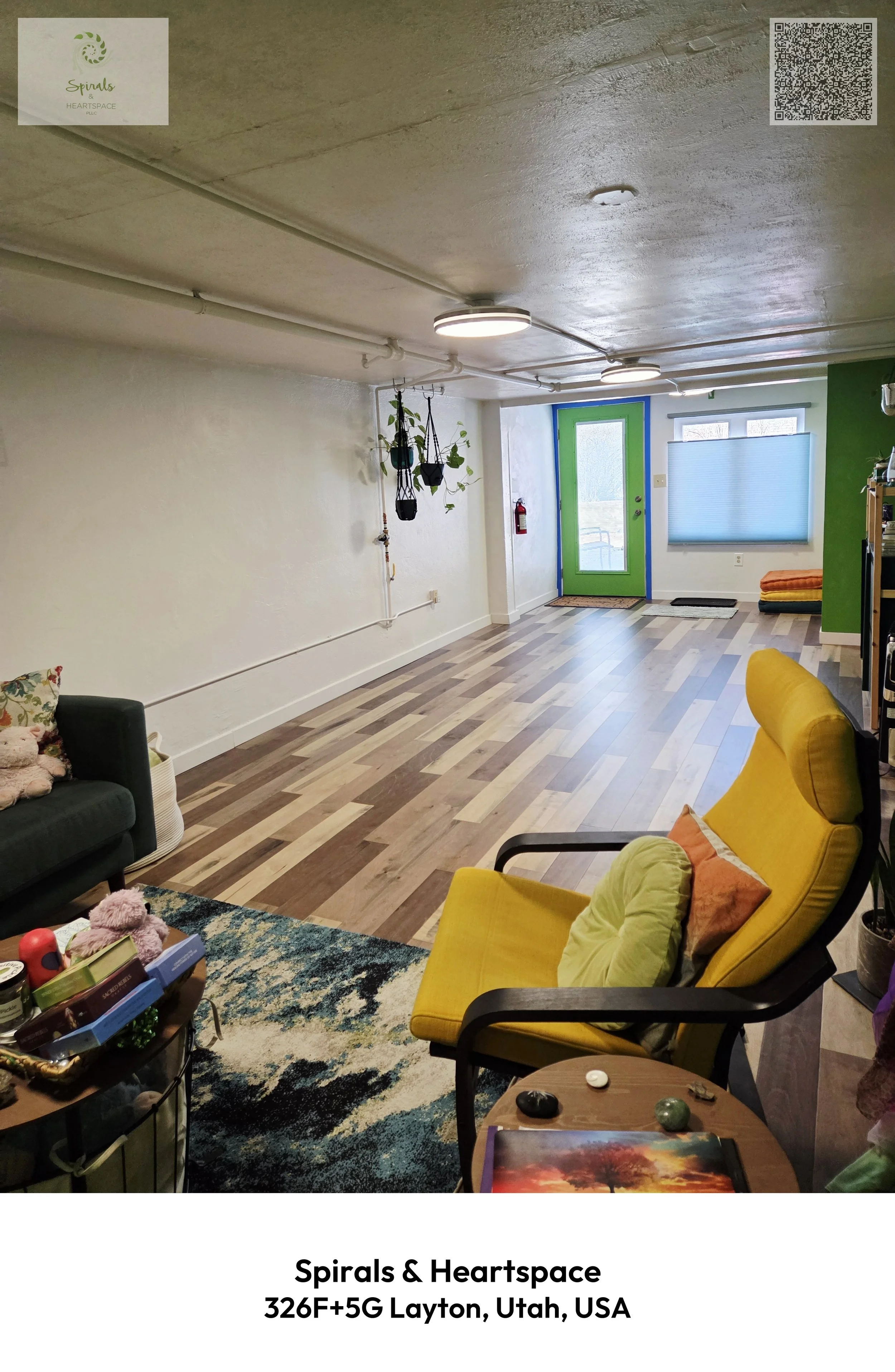
Address: 534 W Gentile St, Layton, UT 84041
Phone: (385) 301-5252
Website: https://spiralsandheartspacehealing.com/
Hours:
Sunday: Closed
Monday: 9:30 AM – 7:00 PM
Tuesday: 9:30 AM – 7:00 PM
Wednesday: 9:30 AM – 7:00 PM
Thursday: 9:30 AM – 7:00 PM
Friday: 9:30 AM – 7:00 PM
Saturday: Closed
Open-location code / plus code: 326F+5G Layton, Utah, USA
Coordinates: 41.0604503, -111.9762128
Map/listing URL: https://www.google.com/maps/place/Spirals+%26+Heartspace/@41.0604503,-111.9762128,766m/data=!3m2!1e3!4b1!4m6!3m5!1s0x875303311f1d4d1b:0xc6859e5e3fceafe2!8m2!3d41.0604503!4d-111.9762128!16s%2Fg%2F11x781dbvb
Embed iframe:
Socials:
Instagram: https://www.instagram.com/spiralsheartspace/
LinkedIn: https://www.linkedin.com/company/spirals-and-heartspace-pllc
TikTok: https://www.tiktok.com/@spiralsheartspace
X: https://x.com/SpiralsHea61786
YouTube: https://www.youtube.com/@SpiralsHeartspace
The practice is led by Ande Welling, a licensed clinical mental health counselor with training in dance/movement therapy, somatic work, EMDR, trauma care, relational neuroscience, and embodied attachment.
Listed services include therapy, coaching, consultation, authentic movement, trauma therapy, somatic therapy, grief counseling, movement therapy, and attachment therapy.
The practice serves adults who want a deeper body-aware approach to trauma, anxiety, depression, grief, burnout, self-abandonment, family patterns, and relationship wounds.
Spirals & Heartspace offers both in-person sessions in Layton and online therapy for clients in Utah.
The practice is locally positioned for clients in Layton, Kaysville, Farmington, Syracuse, Clearfield, Clinton, Roy, Ogden, Bountiful, Davis County, and nearby northern Utah communities.
The office is listed at 534 W Gentile St in Layton, with public listing hours Monday through Friday from 9:30 AM to 7:00 PM.
Prospective clients can call (385) 301-5252 or visit https://spiralsandheartspacehealing.com/ to ask about consultation options, session fit, and scheduling.
The public map listing for Spirals & Heartspace can help clients verify the Gentile Street office before planning an in-person appointment.
Popular Questions About Spirals & Heartspace
What is Spirals & Heartspace?
Spirals & Heartspace is a Layton, Utah psychotherapy and coaching practice offering somatic, trauma-focused, expressive arts, movement-based, and attachment-informed support for adults.
Who is the therapist at Spirals & Heartspace?
The official site identifies Ande Welling as the therapist, coach, movement facilitator, and guide behind Spirals & Heartspace. Listed credentials include LCMHC, BC-DMT, NCC, GL-CMA, BSE, EMDR Trained, and CCTP-II.
Where is Spirals & Heartspace located?
The matching public listing and LinkedIn profile list the address as 534 W Gentile St, Layton, UT 84041.
Does Spirals & Heartspace offer online therapy?
Yes. The official FAQ states that therapy is available in person or through a HIPAA-compliant telehealth platform for clients who live in Utah.
What services does Spirals & Heartspace provide?
Listed services include therapy, coaching, consultation, authentic movement, trauma therapy, somatic therapy, grief counseling, movement therapy, and attachment therapy.
What makes somatic therapy different from traditional talk therapy?
The official Layton page explains that somatic therapy works with body sensations, movement, and physical experience because trauma and emotional patterns can be held in the nervous system, not only in thoughts.
Do clients need dance experience for movement therapy?
No. The official Layton FAQ says no dance training or special physical ability is required, and that movement therapy uses a client’s natural capacity for movement to access emotions and process experiences.
Does Spirals & Heartspace accept insurance?
The official FAQ says the practice does not take insurance directly, but may provide superbills or bill for out-of-network benefits when applicable. Clients should confirm current reimbursement options directly before scheduling.
What are Spirals & Heartspace’s listed hours?
The matching public listing shows Monday through Friday from 9:30 AM to 7:00 PM, with Saturday and Sunday closed. Appointment availability should be confirmed directly.
How can I contact Spirals & Heartspace?
Call (385) 301-5252, visit https://spiralsandheartspacehealing.com/, or use the listed social profiles: https://www.instagram.com/spiralsheartspace/, https://www.linkedin.com/company/spirals-and-heartspace-pllc, https://www.tiktok.com/@spiralsheartspace, https://x.com/SpiralsHea61786, and https://www.youtube.com/@SpiralsHeartspace.
Landmarks Near Layton, UT
Spirals & Heartspace is located on West Gentile Street in Layton, Utah, with in-person therapy available locally and online therapy available for Utah residents. Clients near these landmarks can call (385) 301-5252 or visit https://spiralsandheartspacehealing.com/ to ask about somatic therapy, trauma therapy, movement therapy, grief counseling, attachment therapy, and consultation options.
- 534 W Gentile St — The listed office address for Spirals & Heartspace; clients can use the map listing to verify the office before visiting.
- West Gentile Street — The local street connected with the practice’s Layton office location.
- Downtown Layton — A practical local reference point for clients navigating central Layton.
- Layton Hills Mall — A major Layton shopping landmark and useful orientation point for clients traveling through the city.
- Interstate 15 near Layton — A major northern Utah route that helps clients reach Layton from nearby Davis County communities.
- Layton FrontRunner Station — A transit landmark for clients traveling by commuter rail through Davis County.
- Ellison Park — A local park and community landmark in Layton.
- Great Salt Lake Shorelands Preserve — A major natural landmark west of Layton and a recognizable Davis County destination.
- Hill Air Force Base — A major regional landmark near Layton and Clearfield.
- Kaysville — A nearby Davis County city listed in the practice’s surrounding service area.
- Farmington — A nearby Davis County community included in the broader local service-area language.
- Ogden — A nearby northern Utah city; clients can ask whether online Utah therapy or in-person Layton sessions are the best fit.