Trauma Therapy for Medical Professionals: Healing the Healers
The first time I watched a resident cry in the staff bathroom, she apologized for taking too long to compose herself. She had just signed a death certificate for a child. Ten minutes later, she was back under fluorescent lights, teaching medical students how to read an arterial blood gas. That is the rhythm many clinicians learn early on, a rapid pivot from the unbearable to the everyday. It works, until it does not. Trauma accumulates with interest, and the bill eventually comes due.
This piece is about paying that bill with care. It is for physicians, nurses, PAs, techs, therapists, EMTs, social workers, and the administrators who set the tempo of their days. It is about the specific pressures of medical work and the quiet skills that help clinicians metabolize what they witness. It is not about becoming less human. It is about staying human in environments that often punish it.
Why medical trauma feels different
People outside medicine often assume the hardest part is the gore. It is not. Clinicians adapt quickly to blood and broken bones. What cuts deeper are moral injuries and layered grief. You know the protocol, but the patient cannot access what they need. You counsel a family through a preventable stroke tied to inequity. You become the face of a system someone distrusts. You are the bearer of bad news again and again, and sometimes you feel like the bad news.
Shift work and chronic hypervigilance alter nervous systems. After 12 hours of alarms and interruptions, a brain is not supposed to slide into quiet sleep. Rotating schedules distort circadian rhythm. At the same time, medicine selectively rewards overfunctioning. Colleagues praise you for “pushing through.” This veneer of invulnerability costs clinicians marriages, health, and in too many cases, lives. Surveys across the last decade consistently show higher rates of burnout, depression, and suicidal ideation in medical personnel than in the general population, with variation by specialty. Trauma therapy is not a luxury add-on. It is safety equipment.
Naming what hurts: trauma, grief, and moral injury
Language matters. If everything is trauma, nothing is. In clinical practice, I find it helpful to distinguish three broad categories that often overlap in medical professionals:
-
Trauma from exposure to threat or harm. Think resuscitations that fail, assaults in the ED, or a mass casualty incident. The nervous system encodes these as danger, and symptoms may look like hyperarousal, intrusive memories, or avoidance.
-
Grief from repeated loss. The oncology nurse who attends more funerals than weddings. The ICU team that knows the Beeps of a heart valve by heart but never meets that patient outside the ventilator. Grief can be disenfranchised in medicine, where time to mourn is scarce.
-
Moral injury from violations of deeply held values. Watching a preventable harm unfold because of insurance denials. Working under staffing ratios that make thorough care impossible. Being required to enforce policies that conflict with clinical judgment.
When clinicians can name what they are experiencing, they can choose the right tools. Trauma therapy will help regulate a dysregulated nervous system. Grief counseling will make space for love and loss. Addressing moral injury often requires collective action, ethics consultation, or organizational change in addition to individual work.
What trauma looks like in the clinic and at home
I ask for specifics. General malaise hides in plain sight. The attending who stops presenting at journal club because every study feels like salt in a wound. The paramedic who begins to drive five miles per hour below the limit, scanning for hazards, then wonders why their partner is irritated. The surgical scrub tech who snaps at a question because their working memory is shot after four emergency add-ons.
At home, symptoms may feel like personality changes. Startle responses to small sounds. Numbness that masquerades as calm. Difficulty receiving kindness, because soft emotions open the door to pain. A tendency to escalate minor conflicts, because intensity feels normal. Alcohol or cannabis used not for pleasure but for sedation. These are not moral failings. They are adaptations. The work is to update the adaptation.
The role of trauma therapy for clinicians
When I say trauma therapy, I mean a suite of evidence-based approaches tailored to the person and the context. No one method fits all, and therapists who work with healthcare workers must understand charting pressures, RVUs, on-call fatigue, and scope-of-practice boundaries.
The arc of effective trauma therapy usually includes four threads that weave together: safety and stabilization, processing and meaning-making, reconnection with self and others, and relapse prevention. The methods below map to those threads, and in practice often run concurrently.
Somatic therapy and the physiology of care
Medicine privileges cognition. That bias turns into a liability when treating trauma, which is seated in the body’s threat detection systems. Somatic therapy brings the body back into the room. We work with breath, posture, eye gaze, and micro-movements to renegotiate patterns of hyperarousal or collapse. A charge nurse learns to widen peripheral vision before entering a room with an agitated patient, lowering startle reflex. A resident practices grounding through feet and pelvis after a code, so the next patient encounter is not colored by the previous adrenaline surge.
People sometimes worry that somatic therapy will make them “too soft” for high-acuity work. The opposite tends to be true. A regulated nervous system improves reaction time, fine motor control, and communication. Over six to eight sessions, I watch tremors fade, voices steady, and sleep deepen. We are not teaching relaxation. We https://penzu.com/p/9965c484a800eeb2 are rebuilding options.
Grief counseling that respects medical culture
Grief counseling for clinicians must navigate a culture that manages loss with a mix of gallows humor, detachment, and stoicism. Those strategies help teams get through a shift, but they do not metabolize the losses. Effective grief counseling honors what those strategies provided, then offers additional channels. I often ask, “Where does this patient live in you now?” The answer might be a detail, like a crocheted blanket, or a smell, like chlorhexidine and coffee.
Clinicians benefit from rituals that fit their setting. A few teams I know gather for 90 seconds after a death to name the person and the care delivered. Others keep a private ledger of names in a pocket notebook. I have watched cardiology fellows sew a small, visible stitch on a scrubs pocket on the day of a death, then remove it after a personal reflection period. The form matters less than making grief visible and finite, rather than letting it diffuse into every encounter.
Movement therapy for a body that never sits still
Movement therapy sometimes surprises medical staff who already stand, bend, and lift all day. Movement in therapy is deliberate, not incidental. It helps discharge accumulated activation and rebuild the link between action and agency. For the OR nurse whose shoulders live up by their ears, we might pair shoulder abduction with a phrase like, “I can set this down.” For a paramedic, we might work on transitions, practicing literal thresholds to unhook the body from the ambulance-to-home jump.
Small, repeatable sequences integrated into daily flow work best. Three minutes after a code: a pattern of exhale-focused breaths, a forward fold with soft knees, a glance to three corners of the room to reorient. On-call weekends: a 10-minute mobility circuit between pages. Over a month, clinicians report fewer headaches, steadier appetite, and less end-of-shift buzzing.
Attachment therapy in a system that strains relationships
Attachment therapy addresses the way we connect, especially under stress. Training environments often reward avoidant strategies. Praise arrives when you do not need help and never cry. That creates a lopsided relational map. In practice, avoidant patterns undercut team function and family life. Attachment therapy helps clinicians notice relational reflexes, like withdrawing after conflict or overfunctioning to earn safety.
In sessions, we explore how early caregiving meets current professional culture. This is not about blaming parents or programs. It is about understanding why certain feedback lands like a threat or why delegation feels dangerous. A hospitalist who believes “If I do not carry it all, someone will die” can practice safe micro-delegations and learn to tolerate the healthy anxiety that follows. Partners at home often participate in a few sessions, building shared language for repair.
Evidence-based processing work without re-traumatization
Processing trauma can involve cognitive approaches, exposure-based methods, or bilateral stimulation techniques. I use these judiciously with medical professionals, whose day jobs already push them into repeated exposure. The goal is not to recount every detail. The goal is to integrate memory with new resources and perspectives.
When we revisit a code that haunts someone, we do not relive every second. We chart the arc, anchor to moments of agency, and challenge unhelpful beliefs like “I killed him by calling it too soon.” We fold in facts from the record, ethical frameworks, and the realities of physiology. If bilateral work such as eye movements or tappers helps, we pair it with titrated recall, never flooding. Sessions end with somatic downshifting, so clinicians can return to work without a vulnerability hangover.
Timing and dose: fitting care into clinical life
The most common barrier I hear is time. Clinicians describe schedules governed in 15-minute increments. Good therapy respects that constraint. I favor 50-minute sessions every one to two weeks for three months to start, then we reassess. For clinicians covering nights or rotating services, we schedule seasonal bursts, like six sessions between July and September for interns, or post-ICU-month decompressions. Brief crisis sessions, 25 minutes, can be built into a lunch break with privacy protections and a written plan.
Telehealth has expanded access, but privacy is key. If you cannot speak freely in a call room, therapy becomes another stressor. Secure apps with noise masking help, as do parked-car sessions with attention to heat and safety. Clinics can designate a private room near the staff lounge for mental health visits. That small architectural choice changes use patterns.
When to involve medications
Medication is neither the enemy nor the cure-all. When hyperarousal keeps a surgeon from sleeping more than two hours a night, a short course of a sleep aid can prevent a cascade of errors. When panic attacks derail a resident’s ability to enter a patient room, beta blockers or SSRIs may create a bridge. The key is alignment with values and roles. A flight nurse may avoid sedating medications during stretches of flight duty. A psychiatrist might already be on a regimen that just needs fine-tuning. Collaboration between prescribers and therapists reduces guesswork and stigma.
Confidentiality, licensure, and the fear of disclosure
Many medical professionals avoid care because they fear licensure consequences. That fear is not irrational. Some boards still ask intrusive mental health questions. The landscape is slowly improving, and many states now limit questions to conditions that currently impair practice. Clinicians should review their specific board language. Seek care early, when impairment is not present. Work with therapists experienced in documentation that protects privacy while meeting legal standards. Occupational health and employee assistance programs vary widely in quality and confidentiality. Independent care sometimes offers a safer envelope.
Insurers add another layer. Some clinicians prefer to self-pay to avoid diagnostic labels in claims databases. Others rely on benefits. Either path is valid. The ethical linchpin is informed consent about risks and protections, not a one-size-fits-all recommendation.
Building individual micro-practices that actually stick
Resilience advice often sounds like a poster in a breakroom. Drink water. Be mindful. Take deep breaths. Those injunctions land badly when your pager never stops. The trick is specificity and stacking.
-
Choose one 60-second intervention you can perform between tasks and link it to a trigger you already encounter. Examples: three long exhales after you press “enter” on a note, a brief stretch at the sanitizer station, or labeling your state silently before opening a chart.
-
Create a five-minute boundary ritual that begins after your last patient. No screens. Options include a hand-washing sequence with a chosen phrase, a short walk outside the building, or jotting one gratitude and one grief in a pocket notebook.
-
Identify a colleague for a two-sentence debrief rule. After a hard case, you each say two sentences naming impact and one sentence naming what you need next. Keep it short to lower barriers.
Most clinicians can sustain two or three such practices. More than that becomes homework. The point is not self-optimization. The point is a rhythm that lets the body mark transitions.
Team culture: the difference between lip service and lived support
Organizations often respond to distress with donuts and slogans. Intentions are good. Effects are mixed. The teams that fare better treat psychological safety like a clinical quality metric, with leadership modeling vulnerability and boundaries. Training chiefs start meetings with micro check-ins. Unit managers defend protected breaks and mean it. Debriefs after codes are standard, not discretionary.
Here is a compact checklist used by one emergency department that cut turnover by a third over two years:
-
A 90-second post-event pause after every death or resuscitation, led by whichever team member is available.
-
A weekly 20-minute reflective huddle with rotating facilitation and no hierarchy; starts on time, ends on time.
-
Clear staffing escalation protocols posted and followed, including temporary patient caps when ratios are exceeded.
-
Free, confidential access to trauma-informed therapists with guaranteed first appointment within seven days.
-
Quarterly data shared with staff on burnout indicators and follow-through on changes requested.
None of these replace fair pay or safe staffing. They do, however, make the work less punishing while you fight for systemic fixes.
Specialty-specific patterns and adjustments
Trauma therapy should not treat medicine as a monolith. Different specialties place different loads on the mind and body.
Emergency medicine and EMS demand rapid switching and tolerance for chaos. Clinicians benefit from training that slows the body faster after spikes. I often teach a three-breath cadence paired with a physical anchor like pressing the tongue to the palate to signal safety.
ICU and anesthesia lean toward vigilance and control. Loss of control, such as unexpected deterioration, can activate shame. Therapy here often targets perfectionism and rebuilds collaborative tolerance for uncertainty.
Oncology and palliative care carry chronic grief. Grief counseling comes to the forefront, with rituals and team processes preventing cumulative despair.
Surgery requires stamina and precision. Somatic work focuses on posture, breath, and micro-breaks to preserve function. Attachment themes arise around hierarchy and feedback.
Pediatrics, OB, and NICU involve families and futures. Moral injury is common when systemic barriers thwart care. Advocacy and ethics support become treatment components.
Psychiatry and behavioral health carry unique transference loads. Clinicians benefit from their own supervision-style spaces, even when they are therapists themselves.
What progress looks like
Patients ask, “How will I know this is working?” For medical professionals, I listen for small, concrete shifts. A resident who no longer replays a failed intubation each night. A nurse who asks for help on a heavy assignment without a guilt hangover. An attending who laughs at work again. Sleep, appetite, libido, and patience are crude but honest markers. I use simple scales at intake and every few sessions, like a zero-to-ten rating on hyperarousal, avoidance, and guilt. Over eight to twelve weeks, I expect movement by two to three points. If not, we pivot.
Relapse is normal. A bad shift can pull old symptoms back. That is not failure. It is a reminder that the nervous system is plastic, not perfect. We plan for surges and tapering, much like we do for pain.
When therapy is not enough
Sometimes the healthiest move is to change roles, reduce hours, or leave a unit. I have helped emergency physicians transition to urgent care, ICU nurses to research roles, and surgeons to fellowship tracks that better fit their nervous systems. There is grief in stepping back. There is also relief. Careers are long, and seasons change. It is not quitting to align work with health.
There are also times when organizational harm is the primary driver. No therapy erases unsafe ratios or punitive scheduling. In those cases, therapy focuses on boundaries, documentation, and collective action. Clinicians can connect with unions, professional societies, or legal resources. Healing and advocacy can coexist.
Special considerations for trainees
Interns and residents live in compressed time. Autonomy grows as support recedes. Shame erupts quickly. Programs that normalize early mental health care reduce crises later. I encourage PGY-1s to schedule three sessions early in the year, not because they are broken but because they are building a foundation. Peer groups of four to six residents, facilitated by a trauma-informed therapist, create a pressure valve. Attendance must be protected. If attendance is optional and workload wins, the message is clear.
Supervisors matter. An attending who says, “I have a therapist,” during orientation changes the air in the room. A chief who intervenes when a resident is repeatedly exposed to a trigger without support sets a standard.
Working in rural and resource-limited settings
Rural clinicians face isolation. Colleagues are also neighbors. Confidentiality feels fragile. Teletherapy widens options, but bandwidth and privacy complicate access. Some clinicians arrange sessions in non-medical spaces like libraries or even parked trucks. Cross-state licensure rules are relevant. Interstate compacts reduce friction, and more states join each year. Until then, find therapists licensed where you physically sit during sessions.
Peer consult lines help when specialist support is distant. I advise setting up a small, closed peer group with explicit agreements about confidentiality and frequency. Quarterly in-person retreats, even if they are six hours at a community center, can mark time and renew bonds.
Equity, identity, and belonging
Trauma does not distribute evenly. Clinicians of color, LGBTQ+ staff, disabled clinicians, and immigrants often carry extra layers of stress from discrimination and microaggressions. Women frequently shoulder workplace bias and disproportionate caregiving at home. Culturally responsive trauma therapy does not treat these as side notes. It names them and builds interventions that respect lived experience.
For example, a Black nurse reporting repeated patient refusals of care based on race needs more than soothing words. They may want documentation support, pathways to reassignments that do not penalize them, and a therapist who understands racial trauma. An immigrant physician navigating visa constraints might face unique risks in taking leave. Treatment plans must fold in these realities.
How leaders can make this stick
Leaders ask for toolkits. Toolkits fail without accountability. The institutions that sustain change treat clinician well-being as a strategic priority with budget, metrics, and authority. They build confidential access to trauma-informed care and protect it with policy. They reduce punitive language in performance reviews. They train middle managers to recognize distress early and respond without shaming. They staff adequately, because all the mindfulness in the world cannot fix understaffing.
If you have authority, consider a small pilot with clear measures: a cohort of 30 staff with guaranteed trauma therapy access, protected time, and two brief trainings on somatic skills and grief rituals. Track sick days, turnover intent, and self-reported stress at baseline, three months, and six months. Share results, adjust, and expand.
A note on peer support and supervision for therapists who treat clinicians
Treating medical staff carries its own weight. Therapists can absorb secondhand trauma and moral injury, especially when listening to systemic constraints beyond their control. Regular consultation and supervision are essential. If you are a therapist in this niche, build your own somatic practices and grief rituals. Pair with colleagues outside healthcare to keep perspective. Maintain clear documentation practices that protect client privacy while crafting useful summaries when clients request return-to-work notes.
Stories of change
A rural family physician came to me after her third panic episode in a month, each one triggered by a child with respiratory distress. She had lost a pediatric patient years earlier during a winter storm when transport could not reach them. We worked with somatic tracking to notice her early signals, built a short protocol with her MA to offload nonessential tasks during acute visits, and revisited the earlier loss through a structured grief process. She added a two-minute breath and stretch sequence after each pediatric case. Three months later, she had not had another panic episode. She still felt fear during severe cases, but it did not run the show.
An ICU nurse, 18 years in, came in because she could not stop dreaming about one particular patient who died during a staffing crisis. The dream always ended at the moment she stepped away to help another patient. Through attachment-oriented work, we explored her overresponsibility story. We also met with her unit manager to discuss a pilot of post-event huddles. The dream faded. More importantly, she learned to ask for a second nurse earlier when juggling high-acuity patients, framing it as a safety practice rather than a personal failing.
A surgical resident, brilliant and brittle, presented with irritability and insomnia. He had started to fear the night float. We focused on transitions and movement therapy. He built a three-minute pre-op ritual that quieted his shakes and a five-minute end-of-shift ritual that marked closure. We processed one sentinel event with concise cognitive restructuring and bilateral work. His chief later noted that he had become easier to staff with, not because he was nicer, but because he communicated earlier and accepted help. He still drove himself hard. He just stopped bleeding out energy on shame.
Sustaining the work
Healing for medical professionals is not a one-time project. You will deliver more bad news. You will meet more grief. But your nervous system can learn to carry it differently. Trauma therapy, somatic therapy, grief counseling, movement therapy, and attachment therapy are not abstract categories. They are practical languages for restoring choice, connection, and meaning.
There is a sentence I offer often to clinicians at the end of a session: You do not have to be less caring to hurt less. The work is to care with a body and a life that can hold it. If you lead, build spaces where that is possible. If you are in the middle, gather two colleagues and start a practice that takes five minutes a week. If you are on the edge of leaving, know that stepping back can be an act of devotion, not defeat. The system needs you whole, and so do the people who love you when the pager is finally silent.
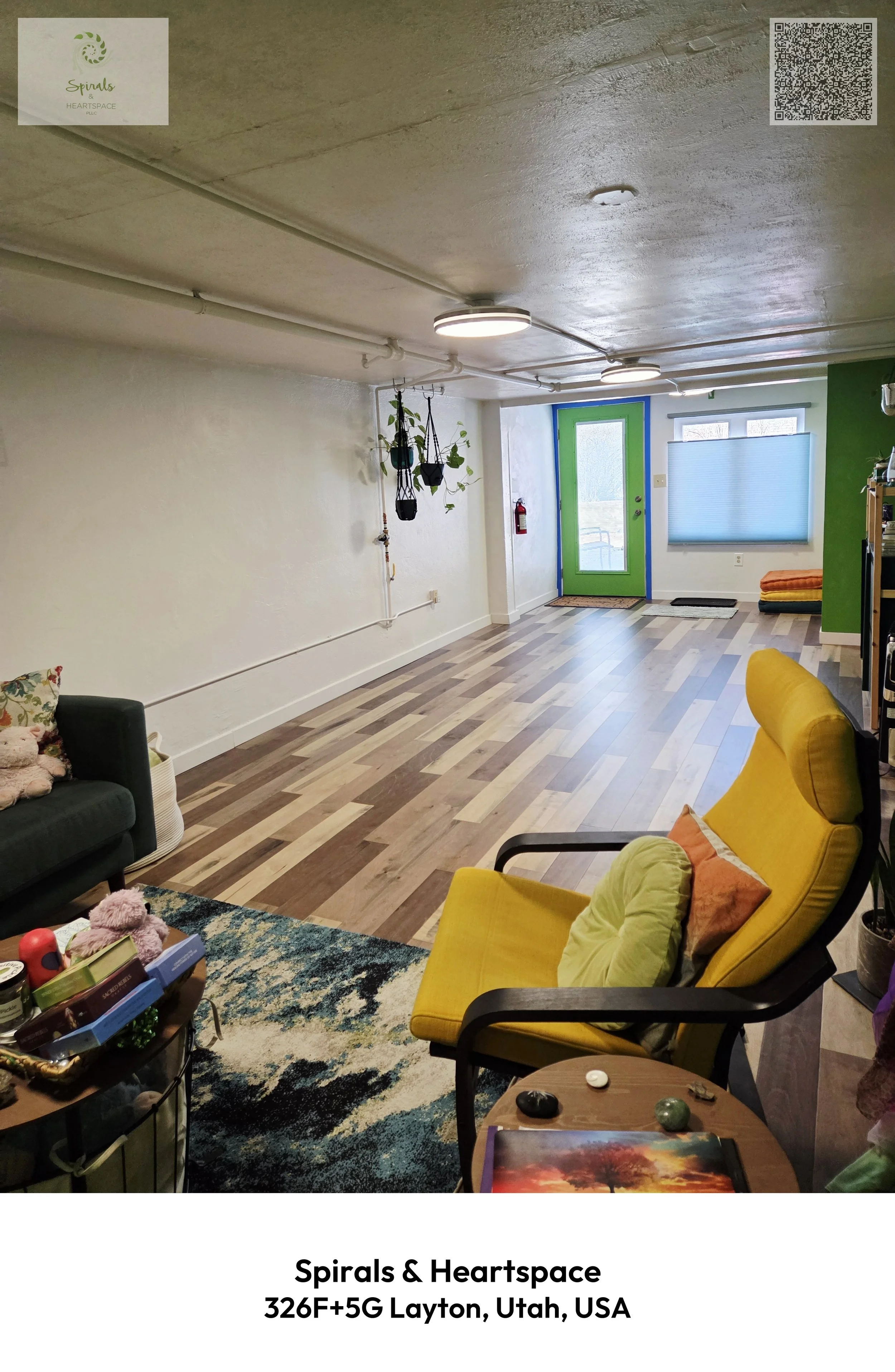
Spirals & Heartspace
Name: Spirals & Heartspace
Address: 534 W Gentile St, Layton, UT 84041
Phone: (385) 301-5252
Website: https://spiralsandheartspacehealing.com/
Hours:
Sunday: Closed
Monday: 9:30 AM – 7:00 PM
Tuesday: 9:30 AM – 7:00 PM
Wednesday: 9:30 AM – 7:00 PM
Thursday: 9:30 AM – 7:00 PM
Friday: 9:30 AM – 7:00 PM
Saturday: Closed
Open-location code / plus code: 326F+5G Layton, Utah, USA
Coordinates: 41.0604503, -111.9762128
Map/listing URL: https://www.google.com/maps/place/Spirals+%26+Heartspace/@41.0604503,-111.9762128,766m/data=!3m2!1e3!4b1!4m6!3m5!1s0x875303311f1d4d1b:0xc6859e5e3fceafe2!8m2!3d41.0604503!4d-111.9762128!16s%2Fg%2F11x781dbvb
Embed iframe:
Socials:
Instagram: https://www.instagram.com/spiralsheartspace/
LinkedIn: https://www.linkedin.com/company/spirals-and-heartspace-pllc
TikTok: https://www.tiktok.com/@spiralsheartspace
X: https://x.com/SpiralsHea61786
YouTube: https://www.youtube.com/@SpiralsHeartspace
The practice is led by Ande Welling, a licensed clinical mental health counselor with training in dance/movement therapy, somatic work, EMDR, trauma care, relational neuroscience, and embodied attachment.
Listed services include therapy, coaching, consultation, authentic movement, trauma therapy, somatic therapy, grief counseling, movement therapy, and attachment therapy.
The practice serves adults who want a deeper body-aware approach to trauma, anxiety, depression, grief, burnout, self-abandonment, family patterns, and relationship wounds.
Spirals & Heartspace offers both in-person sessions in Layton and online therapy for clients in Utah.
The practice is locally positioned for clients in Layton, Kaysville, Farmington, Syracuse, Clearfield, Clinton, Roy, Ogden, Bountiful, Davis County, and nearby northern Utah communities.
The office is listed at 534 W Gentile St in Layton, with public listing hours Monday through Friday from 9:30 AM to 7:00 PM.
Prospective clients can call (385) 301-5252 or visit https://spiralsandheartspacehealing.com/ to ask about consultation options, session fit, and scheduling.
The public map listing for Spirals & Heartspace can help clients verify the Gentile Street office before planning an in-person appointment.
Popular Questions About Spirals & Heartspace
What is Spirals & Heartspace?
Spirals & Heartspace is a Layton, Utah psychotherapy and coaching practice offering somatic, trauma-focused, expressive arts, movement-based, and attachment-informed support for adults.
Who is the therapist at Spirals & Heartspace?
The official site identifies Ande Welling as the therapist, coach, movement facilitator, and guide behind Spirals & Heartspace. Listed credentials include LCMHC, BC-DMT, NCC, GL-CMA, BSE, EMDR Trained, and CCTP-II.
Where is Spirals & Heartspace located?
The matching public listing and LinkedIn profile list the address as 534 W Gentile St, Layton, UT 84041.
Does Spirals & Heartspace offer online therapy?
Yes. The official FAQ states that therapy is available in person or through a HIPAA-compliant telehealth platform for clients who live in Utah.
What services does Spirals & Heartspace provide?
Listed services include therapy, coaching, consultation, authentic movement, trauma therapy, somatic therapy, grief counseling, movement therapy, and attachment therapy.
What makes somatic therapy different from traditional talk therapy?
The official Layton page explains that somatic therapy works with body sensations, movement, and physical experience because trauma and emotional patterns can be held in the nervous system, not only in thoughts.
Do clients need dance experience for movement therapy?
No. The official Layton FAQ says no dance training or special physical ability is required, and that movement therapy uses a client’s natural capacity for movement to access emotions and process experiences.
Does Spirals & Heartspace accept insurance?
The official FAQ says the practice does not take insurance directly, but may provide superbills or bill for out-of-network benefits when applicable. Clients should confirm current reimbursement options directly before scheduling.
What are Spirals & Heartspace’s listed hours?
The matching public listing shows Monday through Friday from 9:30 AM to 7:00 PM, with Saturday and Sunday closed. Appointment availability should be confirmed directly.
How can I contact Spirals & Heartspace?
Call (385) 301-5252, visit https://spiralsandheartspacehealing.com/, or use the listed social profiles: https://www.instagram.com/spiralsheartspace/, https://www.linkedin.com/company/spirals-and-heartspace-pllc, https://www.tiktok.com/@spiralsheartspace, https://x.com/SpiralsHea61786, and https://www.youtube.com/@SpiralsHeartspace.
Landmarks Near Layton, UT
Spirals & Heartspace is located on West Gentile Street in Layton, Utah, with in-person therapy available locally and online therapy available for Utah residents. Clients near these landmarks can call (385) 301-5252 or visit https://spiralsandheartspacehealing.com/ to ask about somatic therapy, trauma therapy, movement therapy, grief counseling, attachment therapy, and consultation options.
- 534 W Gentile St — The listed office address for Spirals & Heartspace; clients can use the map listing to verify the office before visiting.
- West Gentile Street — The local street connected with the practice’s Layton office location.
- Downtown Layton — A practical local reference point for clients navigating central Layton.
- Layton Hills Mall — A major Layton shopping landmark and useful orientation point for clients traveling through the city.
- Interstate 15 near Layton — A major northern Utah route that helps clients reach Layton from nearby Davis County communities.
- Layton FrontRunner Station — A transit landmark for clients traveling by commuter rail through Davis County.
- Ellison Park — A local park and community landmark in Layton.
- Great Salt Lake Shorelands Preserve — A major natural landmark west of Layton and a recognizable Davis County destination.
- Hill Air Force Base — A major regional landmark near Layton and Clearfield.
- Kaysville — A nearby Davis County city listed in the practice’s surrounding service area.
- Farmington — A nearby Davis County community included in the broader local service-area language.
- Ogden — A nearby northern Utah city; clients can ask whether online Utah therapy or in-person Layton sessions are the best fit.