Movement Therapy in Schools: Regulating Bodies, Ready Minds
Years ago, I walked into a third grade classroom just after lunch on a gray January day. The teacher had circled problem behaviors on the board like a weather report, with arrows pointing to “calling out,” “fidgeting,” and “rudeness.” The room buzzed. I asked for five minutes. We pushed chairs back, put on a drum track, and practiced a short sequence, three moves repeated to the beat, breath synced to the exhale. Two students laughed, one refused, most joined reluctantly. Within four minutes, the tone shifted. The teacher raised her eyebrows. We had not fixed hunger, grief, or family stress, yet bodies found a groove. Focus followed.
Movement therapy in schools is not a frill. It is a structured way to help students regulate their nervous systems so they can learn, connect, and cope. It borrows from somatic therapy, draws on principles from trauma therapy and attachment therapy, and respects the reality that many students carry grief into the building. When done well, it folds into the routine rather than disrupts it. When done poorly, it feels like a gimmick. The difference lies in design, delivery, and context.
What movement therapy means in a school setting
Outside school, movement therapy shows up as dance therapy, yoga therapy, martial arts forms adapted for mental health, and occupational therapy techniques. In schools, the goal narrows: help students organize sensation, emotion, and attention, then return them to academics ready to work. The best programs feel like brief, intentional practices built around simple, repeatable sequences.
There is no single method. I have seen success with 2 minute micro resets between lessons, 12 minute structured sequences three times a day, and 30 minute small group sessions for students with higher needs. The arc, however, stays consistent: orient to the room, ground through the feet or seat, coordinate breath with modest effort, add rhythmic bilateral movement, and finish by naming a body sensation in plain language. Words matter. Staff who say, “Notice your feet on the floor,” help students connect signals to meaning. Staff who say, “Calm down,” usually increase pressure without offering a path.
The nervous system case for moving first, then teaching
Learning rides on regulation. When a child’s system is stuck in a defensive state, frontal lobe functions, the ones we ask for in math and reading, do not come online easily. You can see this without a brain scan. Watch a child’s shoulders. Listen to the breath. Look for scanning eyes or rigid posture. These cues tell you more about readiness than a pretest score.
Rhythmic, predictable movement, especially with cross body patterns, engages sensory pathways that downshift hyperarousal and upshift sluggish states. Breath paced movement creates a metronome for the autonomic nervous system. Brief evidence from school pilots shows reductions in time off task and fewer escalations on days when classrooms use consistent movement breaks. In my own practice across two elementary schools, office referrals during the first two hours of the day dropped by 12 to 18 percent in the first quarter after implementing morning regulation sequences. That is not a miracle. It is enough to buy the class time to get through the core lesson.
Somatic therapy has long taught therapists to track posture, tension, and micro movements as data. Bringing that lens into classrooms helps teachers move from moral judgments, “He is being defiant,” to nervous system observations, “His jaw is tight, feet are bouncing, he cannot access listening yet.” This shift changes your intervention. You stop piling on language and start offering a body based way back to connection.
Where grief and attachment show up between 8:00 and 3:00
I once worked with a seventh grader whose dad had died three months before. Grief counseling gave him a place to speak, but his school day still fell apart during transitions. Movement therapy gave him a ritual at the threshold. He would step into the hall, lean his back into the cinderblock wall, push his heels down, count to six, and roll his shoulders to the breath. He knew this was for regulation, not erasing grief. The effect was not dramatic, but it was dependable. He entered class with less fight in his stance.
Attachment therapy reminds us that co regulation comes before self regulation. When we run movement practices, especially with younger children or students who have a history of relational loss, the adult body becomes the anchor. A teacher’s voice pace, stance, and breath entrain the group. Students borrow the adult’s rhythm. If the adult rushes, the exercise erodes. If the adult holds a steady beat and waits for the group to settle, students follow.
Movement therapy will not heal trauma. It will give students micro wins: a way to downshift during a fire alarm drill, a reset when a peer jabs at them, a pattern to use in the cafeteria line. Over months, those wins layer into a sense of agency. That is the ground where deeper trauma therapy or grief counseling can take root.
What a school day with movement therapy can actually look like
Imagine a fifth grade team that agrees on three anchor points for the day: an opening sequence, a mid morning reset before math, and a brief debrief after lunch. The opening sequence is six minutes. Lights are up. Music is optional. Students stand behind chairs. The teacher guides a pattern of heel rocks, shoulder rolls, cross knee taps, and a box breath count. Students learn to adjust intensity. If one has sensory defensiveness, they can press palms together at the chest and focus on breath. The class ends the sequence by naming one of three body words, heavy, light, or buzzy. The mid morning reset is shorter, two minutes of cross crawls and paced exhale through pursed lips. After lunch, the debrief moves students from loud social space back to task by combining a slow sway with a naming practice, “I feel my feet,” or “I feel my hands warm.”
Tier 2 groups meet twice a week for 30 minutes in a quiet room. These groups include students flagged for anxiety, impulsivity, or grief reactions. Sessions follow a tighter arc, start fast to discharge energy, then shift to slower patterns and grounded stillness. A social worker or counselor co leads with a physical educator or occupational therapist, each borrowing from their discipline without turf lines.
Tier 3 support, for individual students with complex trauma histories or significant dysregulation, integrates movement into their plan through consistent, one on one practices that align with therapy goals. A student might use a two minute wall push in the hallway outside each class, a 10 minute rebounder sequence before writing, and a walking route with breath counts before dismissal. Staff treat these as accommodations, not privileges.
Safety, consent, and how to avoid missteps
Movement in schools is not a free for all. We need boundaries that keep students safe and dignified. Clear opt in language protects autonomy. A simple, “Join in as you are able, watching your body’s limits,” communicates choice. Touch should be rare and, when used, requested with explicit consent, “Would you like a hand on your shoulder as we practice this breath pattern,” and respected if declined. For students with a trauma history, proximity and crowding can overwhelm. Spacing matters. Music cannot be so loud that cues are lost or sensory sensitivity is triggered. Students in hijab, skirts, or cultural dress may need modifications. Students with physical disabilities should be able to access the same regulatory arc seated, lying on a mat, or using assistive devices.
Forms that mimic martial arts or law enforcement stances can provoke fear in some students. If in doubt, stay with neutral patterns, heel rocks, cross body taps, gentle twists, and breath paced squats. Avoid language that pathologizes. “You need to calm down” rarely lands as an invitation. “Let’s try a pattern to help your body settle, then we will talk,” preserves dignity.
Staffing and training that actually fit a school calendar
Programs fail when they rely on one charismatic adult. They also fail when training is a one off slideshow. The schools that stick with movement therapy invest in three layers. First, classroom teachers learn three or four sequences they can deliver with fidelity. Second, a small core team, often a counselor, an occupational therapist, and a PE teacher, goes deeper, ready to adapt sequences for specific students. Third, administrators commit to a schedule that protects practice time during the first six weeks, when habits form.
Training must include practice, not just theory. Staff need to feel the difference between a quick inhale that spikes heart rate and a slow exhale that steadies it. They need to try moves with their own tight hamstrings, sore knees, or morning fatigue. The point is not athleticism. It is nervous system literacy.
In my experience, one full day of initial training, followed by three 45 minute refreshers in the first quarter, produces more reliable implementation than a two hour kick off with no follow up. Pair that with short video clips of a colleague running a sequence in a real class, and teachers borrow formats rather than reinventing.
Measuring what matters without burying staff in paperwork
Schools need data, and they need to keep it light. Choose indicators that staff can observe without a stopwatch. Count time to start after transitions. Track frequency of out of seat behavior in the first 15 minutes of class. Use simple scales for students to rate their readiness before and after a sequence, zero to five, once per day. Over four to six weeks, look for trends, not instant cures.
In two middle schools that piloted a daily first period sequence, teachers reported a 20 to 30 second faster settle time within three weeks, and office referrals before 10 a.m. Decreased by about 10 percent. https://sergioenpx603.yousher.com/trauma-therapy-for-immigrants-and-refugees-culturally-informed-care Reading scores did not jump in a month, but writing output, measured as lines on the page in warm ups, rose by an average of two lines for students with ADHD plans. These are modest gains. They matter when stacked across a semester.
Quantitative data should be paired with student voice. A sixth grader telling you, “My chest does not feel so tight after we do the sway,” is outcome data. So is the teacher who says, “I spend fewer minutes managing and more minutes teaching.”
Where movement therapy aligns with broader mental health supports
Movement therapy does not replace counseling. It clears static so counseling can land. Grief counseling provides language and ritual. Movement gives the nervous system a lever in the moment. Trauma therapy processes the story and builds safety, while somatic therapy gives the body permission to resolve activation patterns tied to that story. Attachment therapy strengthens relational patterns that hold a child steady. Schools sit at the junction where all of these touch daily life.
When teams coordinate, the work compounds. A counselor can cue a student, “Use your wall press before our session,” and then build from the calmer baseline. A PE teacher can adapt a warm up so it functions as a campus wide regulation primer. A math teacher who knows a student’s preferred pattern can prompt it subtly before a test, “Take your counted exhale, then begin.”
What gets in the way, and how to navigate the real trade offs
Two forces collide in schools: time and skepticism. Every minute is contested. Some staff fear that movement will eat into instruction. Others worry it looks soft. The remedy is disciplined brevity and visible payoffs. A six minute morning sequence that buys 10 extra minutes of focus is a net gain. But it must be consistent, not optional on busy days. The first three weeks are the hardest. If leadership blinks and lets the practice slide, students learn that regulation is negotiable.
Another trade off sits between structure and choice. If you prescribe one pattern for all bodies, you will lose some students. If you offer a buffet of options in every class, you lose rhythm and authority. A pragmatic path is to teach a known core sequence, then layer two modifications for sensory needs, seated variations, or energy levels.
Equity matters. Some students can afford private classes in yoga or dance. Others rely on school as their only regulated space of the day. If we build movement therapy into the fabric of the day, we reduce that gap. If we make it an optional club after school, we widen it.
Starting small without losing the thread
Here is a lean launch plan I have refined across several campuses:
- Identify two times per day when the whole class is wobblier than usual. Morning arrival and the period after lunch are common. Commit to a short movement sequence at those times for six weeks.
- Train teachers on one core pattern and one seated variation. Provide a 60 second video of a colleague leading it with real kids, ambient noise included.
- Select two simple metrics, time to start work after the movement and student readiness ratings on a zero to five scale, recorded once daily.
- Build opt in language and clear boundaries. Emphasize choice and modifications. Post a visual with three words students can use to name body state, heavy, light, buzzy.
- Schedule two brief huddles in the first month to share wins and adjust the plan. Protect these on the calendar as you would fire drills.
This is one of the two lists in this article, kept tight for clarity. Everything else can live in sentences and shared practice.
Common missteps that spoil good intentions
- Going too hard, too fast. High intensity moves spike arousal in students who are already wired. Start smaller, then build.
- Making it a personality show. If movement therapy depends on one adult’s charisma, it will collapse when they are absent. Scripts and shared routines protect the practice.
- Ignoring sensory diversity. Some students will cover their ears at loud music, others will crave stronger input. Plan for both.
- Treating it as punishment. If you send students to the hallway to “go do your moves” after a misstep, you poison the well. Keep movement as a support, not a consequence.
- Dropping it when testing season hits. That is when regulation is most needed. Protect the routines.
This is the second and final list. The rest of the article stays in flowing prose, as requested.
Space, equipment, and the reality of crowded rooms
I have led effective sequences between desks in cramped rooms. You need a clear path to stand, a safe way to move arms without contact, and a plan for students who prefer to remain seated. Tape on the floor can help younger students visualize personal space. Mats are nice, not necessary. Light hand weights can be useful for students who need more proprioceptive input, but body weight patterns work. Music is a tool, not a requirement. A steady beat helps, a chorus with loaded lyrics distracts. Choose instrumentals, simple percussion, or nothing at all when students are highly activated.
For students with wheelchairs or limited mobility, adjust the axis instead of the aim. A seated cross body reach, a breath paced forward fold while seated, or a gentle torso twist can mirror the arc of a standing sequence. The goal is not symmetry. It is regulation.
How this meets academics in the places that count
I have watched reluctant readers sit longer after a two minute bilateral pattern. In a fourth grade pilot, the percentage of students who completed the daily writing warm up rose from roughly 55 percent to 70 percent over six weeks when teachers paired the warm up with a short movement reset. During fraction lessons in fifth grade, teachers reported fewer calls for breaks when students had a minute of paced exhale right before problem solving. None of this replaces content instruction. It makes the content more reachable.
Executive function skills ride the same rails as regulation. Working memory holds more when distractions dial down. In classrooms that use predictable movement anchors, you see fewer materials lost between desks and backpacks, fewer students stuck at the threshold of tasks, and smoother partner work because students are less primed to perceive peers as threats.
The human side, a few snapshots
A first grader who shouts and flails when his pencil breaks learns to plant feet, press down, and exhale through a count of four. He still feels the snap of frustration, but the storm passes quicker. A high school sophomore with panic attacks before presentations learns to step to the back of the room, place one hand low on the ribs, breathe slower out than in, and roll the shoulders. She does not love presenting. She gets through it with less spiking and fewer tears. A teacher in her 18th year, shoulders tight from carrying everyone’s crisis, leads the class through a gentle sway, and notices her own breathing for the first time all day. The benefits do not stop at the students.
Funding, policy, and how to keep this from being another initiative that fades
You do not need a new wing or a national grant to start. Title funding, mental health grants, or local education foundation mini grants can cover training time and modest materials. Some districts fold movement therapy into existing SEL budgets or professional development days. What matters most is policy support that legitimizes practice time. If the bell schedule leaves no room to breathe, the best intentions fizzle.
Protect the first six weeks. Establish a simple fidelity check, not to police teachers, but to give feedback on what is working. Celebrate early wins publicly. Post a quick clip of a class settling after a sequence. Share teacher quotes. Let families know what their children are practicing, and send home a one page version they can try at night. The practice sticks when it crosses the school door.
How movement integrates with cultural and community strengths
Every community has movement traditions, from step to folk dance to church sway. Invite those rhythms in. A staff member who drums can lead a steady beat while students practice. A parent who teaches capoeira or taiko can guest lead a pattern adapted for the classroom. The danger is appropriation without respect. Ask, do not assume. Co create with families rather than borrowing without context.
Language matters here too. In some cultures, “therapy” carries stigma, while “practice,” “routine,” or “warm up” lands well. You can keep the therapeutic intent, regulation that prepares the brain to learn, while using language that welcomes.
What success looks and feels like over a semester
At first, you notice fewer explosions. Then, you notice smoother starts and re entries after transitions. Teachers report having a little more bandwidth. Students start asking for the sequence without prompting. A student in grief uses the practice before the anniversary date of a loss. Another in foster care chooses to stand near a trusted adult during the sequence and then moves a step farther away as safety grows. The change is often subtle and cumulative. If you only count letter grades, you may miss it. If you watch the arc of the day, you will see attention return sooner and linger longer.
Over a semester, staff grow more skilled at reading the room. They shorten or extend sequences based on signs, bounce in the legs, eyes that glaze, breaths that turn shallow. They develop a shared language that travels from art to science to PE. That shared language is part of the intervention. It signals to students, adults notice bodies and feelings here without shaming.
Final thoughts from practice
Movement therapy in schools asks adults to respect the body as a primary channel for learning, not an afterthought. It asks for brief, regular investments that pay back in attention, behavior, and climate. It does not fix poverty, heal every trauma, or erase grief. It does give students and staff a handle they can grasp on hard days. When you watch a class settle together, breath by breath, you see what schools can be at their best, places where bodies and minds prepare each other for the work of learning.
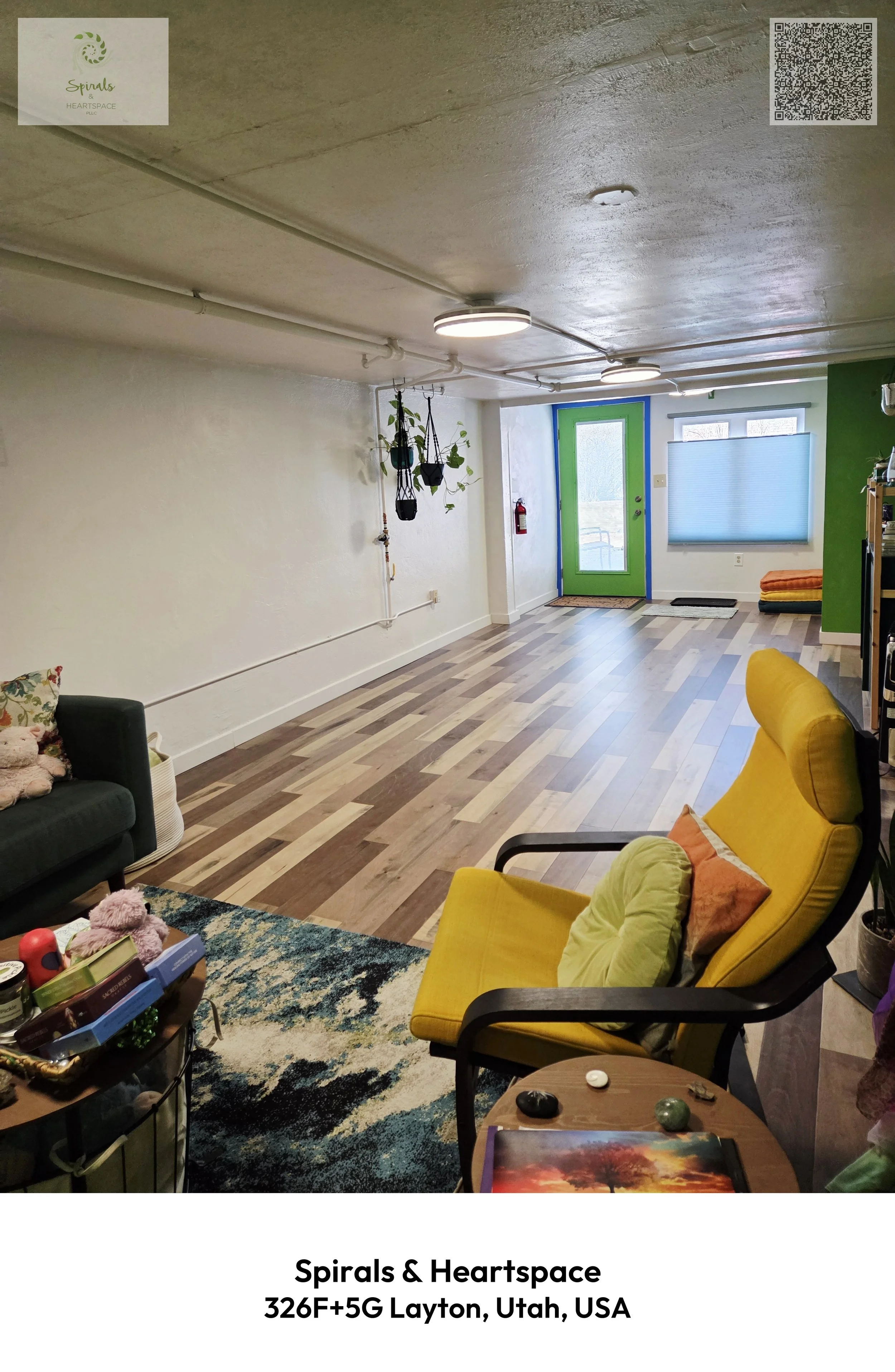
Spirals & Heartspace
Name: Spirals & Heartspace
Address: 534 W Gentile St, Layton, UT 84041
Phone: (385) 301-5252
Website: https://spiralsandheartspacehealing.com/
Hours:
Sunday: Closed
Monday: 9:30 AM – 7:00 PM
Tuesday: 9:30 AM – 7:00 PM
Wednesday: 9:30 AM – 7:00 PM
Thursday: 9:30 AM – 7:00 PM
Friday: 9:30 AM – 7:00 PM
Saturday: Closed
Open-location code / plus code: 326F+5G Layton, Utah, USA
Coordinates: 41.0604503, -111.9762128
Map/listing URL: https://www.google.com/maps/place/Spirals+%26+Heartspace/@41.0604503,-111.9762128,766m/data=!3m2!1e3!4b1!4m6!3m5!1s0x875303311f1d4d1b:0xc6859e5e3fceafe2!8m2!3d41.0604503!4d-111.9762128!16s%2Fg%2F11x781dbvb
Embed iframe:
Socials:
Instagram: https://www.instagram.com/spiralsheartspace/
LinkedIn: https://www.linkedin.com/company/spirals-and-heartspace-pllc
TikTok: https://www.tiktok.com/@spiralsheartspace
X: https://x.com/SpiralsHea61786
YouTube: https://www.youtube.com/@SpiralsHeartspace
The practice is led by Ande Welling, a licensed clinical mental health counselor with training in dance/movement therapy, somatic work, EMDR, trauma care, relational neuroscience, and embodied attachment.
Listed services include therapy, coaching, consultation, authentic movement, trauma therapy, somatic therapy, grief counseling, movement therapy, and attachment therapy.
The practice serves adults who want a deeper body-aware approach to trauma, anxiety, depression, grief, burnout, self-abandonment, family patterns, and relationship wounds.
Spirals & Heartspace offers both in-person sessions in Layton and online therapy for clients in Utah.
The practice is locally positioned for clients in Layton, Kaysville, Farmington, Syracuse, Clearfield, Clinton, Roy, Ogden, Bountiful, Davis County, and nearby northern Utah communities.
The office is listed at 534 W Gentile St in Layton, with public listing hours Monday through Friday from 9:30 AM to 7:00 PM.
Prospective clients can call (385) 301-5252 or visit https://spiralsandheartspacehealing.com/ to ask about consultation options, session fit, and scheduling.
The public map listing for Spirals & Heartspace can help clients verify the Gentile Street office before planning an in-person appointment.
Popular Questions About Spirals & Heartspace
What is Spirals & Heartspace?
Spirals & Heartspace is a Layton, Utah psychotherapy and coaching practice offering somatic, trauma-focused, expressive arts, movement-based, and attachment-informed support for adults.
Who is the therapist at Spirals & Heartspace?
The official site identifies Ande Welling as the therapist, coach, movement facilitator, and guide behind Spirals & Heartspace. Listed credentials include LCMHC, BC-DMT, NCC, GL-CMA, BSE, EMDR Trained, and CCTP-II.
Where is Spirals & Heartspace located?
The matching public listing and LinkedIn profile list the address as 534 W Gentile St, Layton, UT 84041.
Does Spirals & Heartspace offer online therapy?
Yes. The official FAQ states that therapy is available in person or through a HIPAA-compliant telehealth platform for clients who live in Utah.
What services does Spirals & Heartspace provide?
Listed services include therapy, coaching, consultation, authentic movement, trauma therapy, somatic therapy, grief counseling, movement therapy, and attachment therapy.
What makes somatic therapy different from traditional talk therapy?
The official Layton page explains that somatic therapy works with body sensations, movement, and physical experience because trauma and emotional patterns can be held in the nervous system, not only in thoughts.
Do clients need dance experience for movement therapy?
No. The official Layton FAQ says no dance training or special physical ability is required, and that movement therapy uses a client’s natural capacity for movement to access emotions and process experiences.
Does Spirals & Heartspace accept insurance?
The official FAQ says the practice does not take insurance directly, but may provide superbills or bill for out-of-network benefits when applicable. Clients should confirm current reimbursement options directly before scheduling.
What are Spirals & Heartspace’s listed hours?
The matching public listing shows Monday through Friday from 9:30 AM to 7:00 PM, with Saturday and Sunday closed. Appointment availability should be confirmed directly.
How can I contact Spirals & Heartspace?
Call (385) 301-5252, visit https://spiralsandheartspacehealing.com/, or use the listed social profiles: https://www.instagram.com/spiralsheartspace/, https://www.linkedin.com/company/spirals-and-heartspace-pllc, https://www.tiktok.com/@spiralsheartspace, https://x.com/SpiralsHea61786, and https://www.youtube.com/@SpiralsHeartspace.
Landmarks Near Layton, UT
Spirals & Heartspace is located on West Gentile Street in Layton, Utah, with in-person therapy available locally and online therapy available for Utah residents. Clients near these landmarks can call (385) 301-5252 or visit https://spiralsandheartspacehealing.com/ to ask about somatic therapy, trauma therapy, movement therapy, grief counseling, attachment therapy, and consultation options.
- 534 W Gentile St — The listed office address for Spirals & Heartspace; clients can use the map listing to verify the office before visiting.
- West Gentile Street — The local street connected with the practice’s Layton office location.
- Downtown Layton — A practical local reference point for clients navigating central Layton.
- Layton Hills Mall — A major Layton shopping landmark and useful orientation point for clients traveling through the city.
- Interstate 15 near Layton — A major northern Utah route that helps clients reach Layton from nearby Davis County communities.
- Layton FrontRunner Station — A transit landmark for clients traveling by commuter rail through Davis County.
- Ellison Park — A local park and community landmark in Layton.
- Great Salt Lake Shorelands Preserve — A major natural landmark west of Layton and a recognizable Davis County destination.
- Hill Air Force Base — A major regional landmark near Layton and Clearfield.
- Kaysville — A nearby Davis County city listed in the practice’s surrounding service area.
- Farmington — A nearby Davis County community included in the broader local service-area language.
- Ogden — A nearby northern Utah city; clients can ask whether online Utah therapy or in-person Layton sessions are the best fit.