Grief Counseling for Sudden Loss: Navigating Shock
Sudden loss reorganizes a life in an instant. You wake up in one reality and end the day in another, with no warning and no map. As a clinician, I have sat with parents who learned of a teen’s fatal crash from a police officer’s knock, spouses who picked up a silent phone and realized their partner would not return, colleagues who watched a healthy coworker collapse in a meeting. The first hours and days carry a particular kind of shock, the body and mind straining to make sense of something that will never fully make sense. Grief counseling for sudden loss respects this rupture. It meets shock directly, works with the nervous system as much as with thoughts and beliefs, and builds a scaffold sturdy enough to hold unbearable feelings in tolerable doses.
What shock does to a human body
Shock is not just a feeling word. It is a measurable shift in physiology. Heart rate spikes, then dips. Breathing turns shallow. Cortisol and adrenaline mobilize. The prefrontal cortex, which helps with planning and language, may go briefly offline. Memory encoding gets patchy. People report numbness, surreal calm, or a narrowed tunnel where only fragments register, like the texture of the carpet or the sound of a clock.
Acute shock is adaptive. It buys time and protects you from being flooded all at once. The problem comes when shock hardens into a fixed state. I see this when a person still cannot retrieve core details several weeks out, cannot sleep without reliving the scene, or feels outside their own body most of the day. This is where trauma therapy and grief counseling intersect. Grief needs room for pain and meaning. Trauma adds the stuck patterns of neurobiology. Effective care treats both.
The first week after sudden loss
In sessions during the first week, I slow everything down. People are often managing calls, legal paperwork, travel, funeral planning, and waves of visitors. The nervous system needs punctuation marks. Micro-pauses. Breath and hydration. Eating is hard, but the brain burns through fuel in shock. I often suggest packing snacks the way you would for a child on a long drive. Soup, yogurt, toast with eggs, banana, nuts. Nothing heroic, just enough.
Helpful support also depends on stage and setting. A widower may need help calling the bank and canceling a trip. A college roommate may need language to inform professors. A parent might want to delay viewing a body until accompanied by a trusted friend. There is no single right path. There are better and worse fits for a given person at a given moment.
Here is a brief field guide I offer for the first 72 hours. It is not a prescription, just scaffolding.
- Anchor the body every few hours: drink water, eat something small, and step outside to feel air on your face. Set phone alarms if you need.
- Name five facts you know to be true. The brain craves orientation in disorientation. Facts like the day of the week, who is with you, where your keys are.
- Choose one or two communication channels. Ask a point person to update others. You do not have to return every message.
- Limit exposure to graphic details or repetitive retellings, especially before sleep. You can revisit specifics later with support.
- Create a holding plan for the night. Who can stay over or be on call. Decide on a simple pre-sleep routine, such as shower, tea, brief check-in, lights out.
Grief counseling that honors both love and disruption
Grief counseling is not about fixing a problem. It is about tending to a relationship that continues in a new form and supporting a nervous system weathering its worst storm. The work shifts over time. In early sessions, I listen for the person’s anchors and hazards. Anchors might be a warm memory that brings tears and breath. Hazards might be spirals of self-blame or images that trigger a panic surge.
A common tension appears between the need to function and the need to feel. I had a client, a school administrator, who kept moving through tasks with crisp efficiency while privately worrying that her dry eyes meant she did not care enough. We practiced five-minute grief windows, where she set a timer, looked at a photo, cried, and then transitioned to a grounding exercise. Her tears came, then her sleep improved. Function and feeling do not have to compete if the rhythms are intentional.
The content of sudden loss often colors the grief. A death by overdose carries stigma and uncertainty about what to tell children. A workplace accident brings regulatory reviews and media attention, which add re-traumatizing layers. A heart attack on a quiet Sunday might leave a home that looks exactly the same, creating a haunted normal. Grief counseling pays attention to these textures. It helps you make decisions that fit your values and capacities, not expectations set by relatives or social media.
Trauma therapy when the loss is also a wound
When exposure to the event imprints the body with terror or helplessness, trauma therapy becomes essential. Here the goal is to help the nervous system discharge and reorganize, so the memories can be remembered without reliving them. Evidence-based approaches vary. I use elements of EMDR when intrusive images dominate, titrating the pace so cognition and sensation stay connected. I draw from Cognitive Processing Therapy when guilt and “if only” thoughts spiral. Narrative and meaning-making matter, but not at the expense of safety.
Somatic therapy is central in these cases. Muscles that braced during the phone call stay braced weeks later. Shoulders and jaw hold stories. I might notice a client’s foot frozen against the floor while they describe the hospital waiting room. We bring attention there, invite the foot to press and release, find movement that completes a thwarted action. Small shifts like a longer exhale or a loosening in the back often precede verbal insight. The body, allowed to do what it could not then do, stops sounding the alarm so loudly.
Movement therapy can look modest. No choreographed routines, no expectation to perform. One widower found relief in walking slow laps at the same time daily, swinging his arms as if carrying his wife’s favorite market bag. Another client placed a yoga mat beside the bed and rolled her spine each morning, naming a memory on each roll. Movement gives grief a channel. It translates static anxiety into kinetic processing, metabolizing stress chemicals and making sleep possible.
Attachment therapy and the continuing bond
Sudden loss rips at attachment. Clients ask, who am I if the person who mirrored me is gone. Attachment therapy does not pathologize this ache. It works with the bond itself, acknowledging that love does not stop. We explore the internal working model of the relationship. Was it a secure base, an inconsistent comfort, a source of strain. We then help the client internalize the benevolent parts and grieve the injuries with compassion.
I often guide clients to develop rituals of connection that feel authentic, not performative. A musician might keep a guitar pick on a keychain. A parent might write their child’s initials in the sand at the first snowfall, then take a photo. A spouse might cook the same Friday meal and say a brief grace naming one quality they loved. These practices do not trap someone in the past. They provide a bridge that makes the present more inhabitable.
Attachment lenses also reveal why certain triggers sting. A friend who stops calling may echo early experiences of abandonment, intensifying the current loss. Therapy can build new patterns of reaching and receiving support. This is not quick work, but I have seen people who once feared intimacy allow more people to stand beside them after a death, which is a profound outcome in its own right.
The question of responsibility and the weight of “if only”
Sudden loss often produces counterfactuals. If only I had made him see a doctor. If only we had left ten minutes later. The mind is trying to reassert control by finding a cause it can influence. This can metastasize into corrosive self-blame. I use a simple frame: evaluate decisions based on information available then, not hindsight now. We lay out the decision tree you faced, the constraints you knew, the norms you followed. In most cases, clients discover they made reasonable choices in an uncertain world. In the few cases where an omission is real, we grieve that truth without making it the whole story of the relationship.
One father blamed himself for letting his son borrow the car on a rainy night. We reviewed weather data, the son’s driving history, the state of the tires, the planned route. Nothing indicated a reckless decision. The accident involved another driver who crossed the center line. It took several sessions for the father’s body to absorb what he already knew cognitively. When he did, his stomach unclenched, and he could visit the crash site without collapsing.
Sleep, appetite, and the body’s negotiations
Acute grief often rearranges sleep. Some cannot fall asleep because the moment of quiet invites images. Others crash at odd hours and wake at 3 a.m., heart racing. I recommend strict light hygiene for two weeks. Morning light to anchor circadian rhythm. Dimming screens an hour before bed. Warm shower, light snack with protein and carb, then in-bed breathing with a five-count inhale, six-count exhale. If panic rises, get out of bed and sit in a different chair to read or journal until your body settles, then return. Short-term sleep aids can help, but only after consulting a physician who understands grief, as certain medications can blunt emotional processing or complicate breathing.
Eating is its own negotiation. Some lose appetite, some binge for comfort, others oscillate. Here again, practicality wins. Aim for three small meals. Include something salty, something soft, and something with crunch to engage sensory pathways that soothe the vagus nerve. I have had clients keep a soup pot on low all day and dip a mug when hunger stirs. Chewing gum can interrupt jaw clenching. Gentle hydration steadies lightheadedness that some misread as panic.
The body also holds the image of the death. Smells, textures, and sounds can trigger spikes. One nurse who lost a colleague to a cardiac arrest could not tolerate the beeping of monitors at work. We recorded the sound and played it at low volume while she squeezed a stress ball and focused on exhalations. Over time, the sound lost its tyrannical grip. The goal is not to erase triggers but to expand your capacity to be with them.
Rituals and the work of saying hello and goodbye
Funerals, memorials, and private rituals are not formalities. They are technologies of meaning. They help a community metabolize impact and allow a bereaved person to witness their love made visible. After sudden loss, rituals may need adjustment. A family floored by a suicide might prefer a smaller service to avoid speculation. A workplace grieving a colleague can schedule a 20-minute standing gathering with a memory round, https://penzu.com/p/379e913d19df65bd a poem, and a plan for commemorative action, like a scholarship.
Timing matters less than felt readiness. Some hold a memorial quickly, then a one-month or three-month remembrance. The first anniversary often catches people by surprise. I suggest calendaring it early and planning a low-key act of connection. Light a candle, visit a place you shared, read a letter aloud. If public rituals do not fit your culture or preference, private practices count. Grief responds to sincerity, not spectacle.
Children, teens, and the language of sudden loss
Children need truthful language scaled to their development. Euphemisms confuse. A five-year-old told that grandma “went to sleep” may fear bedtime. Better to say, her body stopped working and cannot start again, and we will miss her a lot. Teens often want details and privacy. Offer both. Invite their questions, answer simply, and respect their timing. Check in weeks later, as delayed reactions are common once peer routines resume.
Schools and teams can partner well if given guidelines. Share what the child wants known, identify one staff contact, and propose simple accommodations like extra bathroom passes or a quiet space. Watch for changes in grades, sleep, or irritability over a month. Not every wobble signals pathology. Persistent isolation, substance use, or self-harm talk requires immediate attention.
Complicated grief, PTSD, and when to seek more help
Most acute grief is painful but adaptive. It modulates over months, with waves that become less frequent and less incapacitating. Some people develop Prolonged Grief Disorder, where yearning and impairment remain intense beyond a culturally expected period, often past a year. Others develop PTSD, particularly when the death involved violence, direct exposure, or a sense of life threat. Some develop both. Assessment should look at functional domains: sleep, work, relationships, substance use, and safety.
Know the red flags that warrant urgent evaluation by a clinician or emergency services.
- Persistent thoughts of not wanting to live, intent to die, or a plan for self-harm.
- Inability to perform basic self-care for several days, such as eating or hygiene, with no support in place.
- Substance use that escalates rapidly, blackouts, or combining depressants and sedatives.
- Dissociation that leaves a person wandering, driving without recall, or unable to recognize familiar people.
- Aggression or threats that are out of character and linked to access to weapons.
The social context: help that helps
Support pours in at first, then thins by week three. This is not malice. People do not know what to say, and routines reclaim them. It helps to name what you need concretely. A neighbor can walk the dog at 7 a.m. A friend can handle grocery pickup on Tuesdays. Colleagues can triage email and protect your calendar. If someone offers the vague “Let me know if you need anything,” reply with one small ask. You are not a burden. You are giving them a way to love you.
Language matters. Platitudes sting, even well-meant ones. “He is in a better place” can feel like an erasure. Better are simple, honest lines: “I am so sorry. I am here. I can sit with you.” If you are the supporter, remember consistency beats intensity. A text every Friday at noon for three months outruns a flurry the first week.
Workplaces can do better than a condolence bouquet. Encourage employees to take grief days, not just sick days. Offer flexibility for court dates, estate meetings, and memorials that fall outside the initial week. Provide a quiet room where someone can cry or call a therapist. Train managers to check in without prying, and to hold clear expectations with humane adjustments.
Culture, faith, and permission to grieve your way
Grief is culturally shaped. Some families wail and hold open houses for a week. Others grieve behind closed doors. Some traditions wash the body, others forbid viewing. A clinician who imposes a single model does harm. I ask clients, what would your people do if the world were kind to you right now. Then we adapt. An immigrant client missed the rituals of home, so we recreated elements with local elders, food, and music. The relief on her face when the songs began told us we were in the right place.
Faith can anchor or complicate grief. A person who believes in an afterlife may still feel outraged at God. A secular person may find comfort in community more than metaphysics. There is room for both. I have prayed with clients when asked, and I have sat in silence when words obscured the sacredness of breath.
Telehealth, in-person sessions, and what fits when
After sudden loss, leaving the house can feel impossible. Telehealth grief counseling removes that barrier. Video sessions allow immediate support, access to your own comforts, and easier scheduling. I have worked with clients from their cars outside a courthouse, from a park bench after a difficult phone call, from bed on a stormy night. In-person sessions offer the ground of shared space and can incorporate movement therapy more naturally. A hybrid model often works best. Start where you are most likely to show up, then adjust as energy returns.
The role of time and the myth of closure
People will ask whether you have found closure. Most of my clients dislike that word. It implies a door you can shut with enough work. Love does not close. What changes is the shape of the day. The first month might be about surviving the basics. The third month, about renegotiating identity. Month eight, about navigating holidays and the numbing effect of others moving on. At a year, some feel better, others worse, surprised by a resurgence of sadness once the world expects recovery.
I prefer the language of integration. You learn to carry your person within a life that keeps unfolding. Some days the weight is light. Some days it crushes you again. Both are normal. The measure of healing is not the absence of tears. It is the return of moments when you forget to guard yourself and still feel safe.
A brief clinical vignette tying it together
A 42-year-old teacher lost her brother to a sudden stroke. She received the call during a staff meeting, went cold, then drove to the hospital in a haze. In our first session, she could not recall how she got home. She had not slept more than two hours at a time and had stopped eating. We focused on stabilizing routines: water on waking, standing on the porch for morning light, one bowl of soup at lunch, showers at night with slow exhales. We used somatic therapy to release the bracing in her shoulders. She practiced a grounding mantra with her brother’s name, touching a bracelet he had given her.
By week three, intrusive images of the intensive care unit dominated. We added trauma therapy elements, using bilateral stimulation while she narrated safe segments of memory. We established clear stop signals and returned to resource images when her affect spiked. Simultaneously, we attended to attachment: she described her brother as the family’s quiet protector. We explored how she might carry that quality forward, not by taking on his role, but by naming and practicing her version of steady presence.
She created a small movement therapy ritual, a ten-minute walk each evening to a bench they used to share, swinging her arms and naming one story aloud. She organized a low-key memorial at the school with colleagues, where they read a poem and planted a tree. At two months, she still cried regularly, but she was sleeping 6 to 7 hours, eating meals, and teaching part time with support. The ICU images had softened. Her grief had space to breathe.
If you are supporting someone in shock
People in shock often need fewer words and more anchoring. Offer a glass of water held to their hand. Ask simple questions: Can I text your sister. Do you want to sit by the window or on the couch. Keep your voice low and steady. If they start to dissociate, invite them to look around and name the color of three objects in the room. Do not argue with their emotions. You can correct clear misinformation gently later, but first, be a warm human who is not afraid.
When logistics surge, coordinate. Build a shared document of tasks and contacts. Protect the bereaved person from decision fatigue by offering two options, not ten. If you bring food, use containers that do not require returning. Label ingredients clearly. Drop the meal, hug briefly if welcome, and leave unless asked to stay.
For the long road
Grief counseling is not a tunnel with a light at the end. It is a set of tools for walking a new landscape. Some stretches are beautiful. Sunrise on a day you did not think you would reach. Laughter that breaks through and feels like oxygen. Other stretches are brutal. A random Tuesday when a smell pulls you under. The work is to build enough capacity, connection, and compassion that both kinds of days can be survived and, at times, held with gratitude.
Across years of practice, the most consistent truth I have seen is this: people do not get over sudden loss, but they do grow around it. Trauma therapy helps unstick what shock glued down. Somatic therapy and movement therapy give the body a way to finish what it started. Grief counseling tends to the love itself, while attachment therapy teaches the heart to keep bonding even when the beloved is physically gone. With the right support, you will not erase what happened. You will learn to live a life that can carry it. That life, with its scars and its unexpected graces, is still a life worth inhabiting.
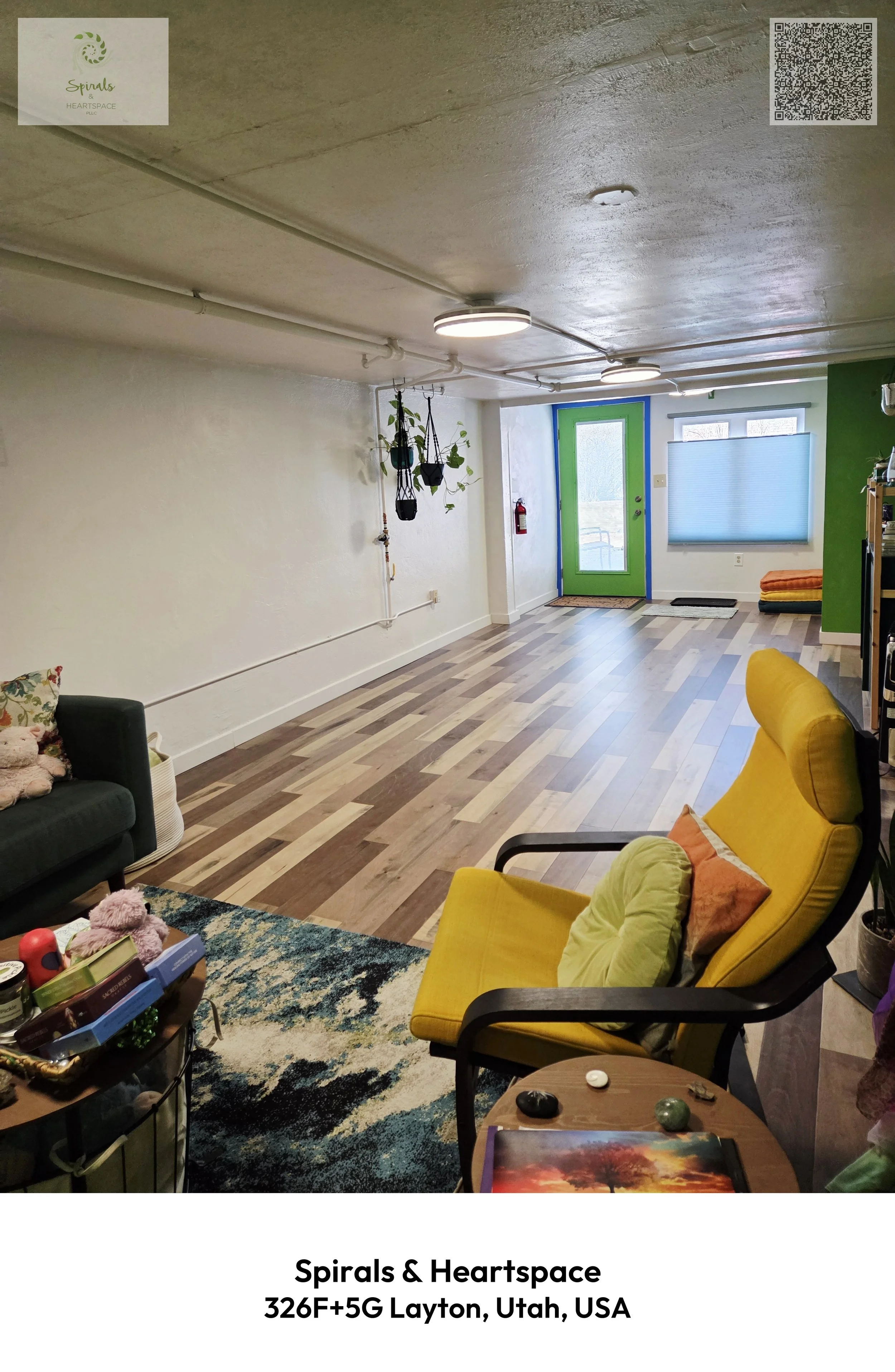
Spirals & Heartspace
Name: Spirals & Heartspace
Address: 534 W Gentile St, Layton, UT 84041
Phone: (385) 301-5252
Website: https://spiralsandheartspacehealing.com/
Hours:
Sunday: Closed
Monday: 9:30 AM – 7:00 PM
Tuesday: 9:30 AM – 7:00 PM
Wednesday: 9:30 AM – 7:00 PM
Thursday: 9:30 AM – 7:00 PM
Friday: 9:30 AM – 7:00 PM
Saturday: Closed
Open-location code / plus code: 326F+5G Layton, Utah, USA
Coordinates: 41.0604503, -111.9762128
Map/listing URL: https://www.google.com/maps/place/Spirals+%26+Heartspace/@41.0604503,-111.9762128,766m/data=!3m2!1e3!4b1!4m6!3m5!1s0x875303311f1d4d1b:0xc6859e5e3fceafe2!8m2!3d41.0604503!4d-111.9762128!16s%2Fg%2F11x781dbvb
Embed iframe:
Socials:
Instagram: https://www.instagram.com/spiralsheartspace/
LinkedIn: https://www.linkedin.com/company/spirals-and-heartspace-pllc
TikTok: https://www.tiktok.com/@spiralsheartspace
X: https://x.com/SpiralsHea61786
YouTube: https://www.youtube.com/@SpiralsHeartspace
The practice is led by Ande Welling, a licensed clinical mental health counselor with training in dance/movement therapy, somatic work, EMDR, trauma care, relational neuroscience, and embodied attachment.
Listed services include therapy, coaching, consultation, authentic movement, trauma therapy, somatic therapy, grief counseling, movement therapy, and attachment therapy.
The practice serves adults who want a deeper body-aware approach to trauma, anxiety, depression, grief, burnout, self-abandonment, family patterns, and relationship wounds.
Spirals & Heartspace offers both in-person sessions in Layton and online therapy for clients in Utah.
The practice is locally positioned for clients in Layton, Kaysville, Farmington, Syracuse, Clearfield, Clinton, Roy, Ogden, Bountiful, Davis County, and nearby northern Utah communities.
The office is listed at 534 W Gentile St in Layton, with public listing hours Monday through Friday from 9:30 AM to 7:00 PM.
Prospective clients can call (385) 301-5252 or visit https://spiralsandheartspacehealing.com/ to ask about consultation options, session fit, and scheduling.
The public map listing for Spirals & Heartspace can help clients verify the Gentile Street office before planning an in-person appointment.
Popular Questions About Spirals & Heartspace
What is Spirals & Heartspace?
Spirals & Heartspace is a Layton, Utah psychotherapy and coaching practice offering somatic, trauma-focused, expressive arts, movement-based, and attachment-informed support for adults.
Who is the therapist at Spirals & Heartspace?
The official site identifies Ande Welling as the therapist, coach, movement facilitator, and guide behind Spirals & Heartspace. Listed credentials include LCMHC, BC-DMT, NCC, GL-CMA, BSE, EMDR Trained, and CCTP-II.
Where is Spirals & Heartspace located?
The matching public listing and LinkedIn profile list the address as 534 W Gentile St, Layton, UT 84041.
Does Spirals & Heartspace offer online therapy?
Yes. The official FAQ states that therapy is available in person or through a HIPAA-compliant telehealth platform for clients who live in Utah.
What services does Spirals & Heartspace provide?
Listed services include therapy, coaching, consultation, authentic movement, trauma therapy, somatic therapy, grief counseling, movement therapy, and attachment therapy.
What makes somatic therapy different from traditional talk therapy?
The official Layton page explains that somatic therapy works with body sensations, movement, and physical experience because trauma and emotional patterns can be held in the nervous system, not only in thoughts.
Do clients need dance experience for movement therapy?
No. The official Layton FAQ says no dance training or special physical ability is required, and that movement therapy uses a client’s natural capacity for movement to access emotions and process experiences.
Does Spirals & Heartspace accept insurance?
The official FAQ says the practice does not take insurance directly, but may provide superbills or bill for out-of-network benefits when applicable. Clients should confirm current reimbursement options directly before scheduling.
What are Spirals & Heartspace’s listed hours?
The matching public listing shows Monday through Friday from 9:30 AM to 7:00 PM, with Saturday and Sunday closed. Appointment availability should be confirmed directly.
How can I contact Spirals & Heartspace?
Call (385) 301-5252, visit https://spiralsandheartspacehealing.com/, or use the listed social profiles: https://www.instagram.com/spiralsheartspace/, https://www.linkedin.com/company/spirals-and-heartspace-pllc, https://www.tiktok.com/@spiralsheartspace, https://x.com/SpiralsHea61786, and https://www.youtube.com/@SpiralsHeartspace.
Landmarks Near Layton, UT
Spirals & Heartspace is located on West Gentile Street in Layton, Utah, with in-person therapy available locally and online therapy available for Utah residents. Clients near these landmarks can call (385) 301-5252 or visit https://spiralsandheartspacehealing.com/ to ask about somatic therapy, trauma therapy, movement therapy, grief counseling, attachment therapy, and consultation options.
- 534 W Gentile St — The listed office address for Spirals & Heartspace; clients can use the map listing to verify the office before visiting.
- West Gentile Street — The local street connected with the practice’s Layton office location.
- Downtown Layton — A practical local reference point for clients navigating central Layton.
- Layton Hills Mall — A major Layton shopping landmark and useful orientation point for clients traveling through the city.
- Interstate 15 near Layton — A major northern Utah route that helps clients reach Layton from nearby Davis County communities.
- Layton FrontRunner Station — A transit landmark for clients traveling by commuter rail through Davis County.
- Ellison Park — A local park and community landmark in Layton.
- Great Salt Lake Shorelands Preserve — A major natural landmark west of Layton and a recognizable Davis County destination.
- Hill Air Force Base — A major regional landmark near Layton and Clearfield.
- Kaysville — A nearby Davis County city listed in the practice’s surrounding service area.
- Farmington — A nearby Davis County community included in the broader local service-area language.
- Ogden — A nearby northern Utah city; clients can ask whether online Utah therapy or in-person Layton sessions are the best fit.