Attachment Therapy for Relationship Repair: From Rupture to Repair
Rupture is not a sign a relationship is broken beyond repair. It is a sign a bond is alive and affecting both nervous systems involved. Attachment therapy treats rupture as meaningful data, then builds a repeatable pathway toward repair. In my consulting room, I have watched couples and families learn this pathway the way a pianist learns scales, slowly at first, then with more flow, until a shared rhythm returns after conflict. That rhythm is not the absence of pain. It is the predictable return to safety.
What rupture feels like in real time
Most people recognize the moment after it passes. Before that, the body picks it up. Breathing goes shallow. Jaw tightens. Shoulder blades rise like armor. Vision narrows. The mind reaches for old storylines, often within a tenth of a second, long before words emerge. No matter how accomplished or logical a person is, attachment threat makes the body move fast and the language centers lag.
One couple I worked with, both lawyers used to cool argument, found themselves trapped in a loop around household fairness. Each time he brought up a missed task, her chest clamped and her hands went numb. She heard his voice as a prosecutor's closing statement. He saw her silence as indifference and escalated to prove his point. In attachment therapy, we slowed the scene down and placed a stethoscope on the moment her fingers went cold. That somatic detail opened an entire history of criticism in her family of origin, and the link to her current shutdown made sense, not as a choice but as a survival reflex.
What attachment therapy actually offers
Attachment therapy is not a lecture on your childhood. It is a practice space to experience safety in the presence of another person. That includes the therapist, who models curiosity over blame and helps both people find language for implicit body states. In a good session, the aim https://arthurtuym052.iamarrows.com/attachment-therapy-and-the-inner-child-reparenting-ourselves is not perfect agreement. The aim is contact. We want two nervous systems that can move from alarm back to connection while staying embodied and coherent.
The core offer is threefold. First, we map the pattern with compassion. Second, we create and rehearse the repair sequence. Third, we strengthen the new pathway with repetition and real-time coaching. This looks different with couples, parent-child pairs, or adult siblings. The principle is the same. Security grows from experiences of being known and responded to when distressed.

Attachment patterns are useful, but not a diagnosis
We all carry working models of closeness learned early, shaped by temperament and life events. People often come in having read about secure, anxious, avoidant, and disorganized patterns. These labels can help orient us, as long as we treat them like weather forecasts, not identities.
Anxiously leaning partners tend to pursue contact quickly when they feel distance, sometimes with protest that lands as criticism. Avoidantly leaning partners regulate by creating space, often misread as disinterest when it is really an attempt to lower arousal. Disorganized strategies hold both impulses, approach and retreat, at once, a product of early experiences where the caregiver was both source of comfort and fear. No one is purely one style. Under low stress, many people behave securely. Under threat, the older code runs.
Attachment therapy uses these maps to predict likely moves in the dance. If I know one partner will shut down when voice tones rise, we build a signal and a plan for pacing and repair. If I know another partner floods when eye contact holds too long, we practice looking away and back while staying connected in other ways. The point is never to shame the strategy. The point is to widen the range.
The body is part of the conversation
Somatic therapy sits at the center of this work. When a client tells me, “I just reacted,” I ask where in the body that reaction lived. Maybe the diaphragm locked. Maybe the sternum burned. These are not poetic details. They are entry points for regulation. If the rib cage is frozen, a movement therapy intervention might shake out the scapulae for 90 seconds, then return to the conversation. If the throat is tight, a held hum for five breaths may reopen voice. People tend to look skeptical until they feel the difference in the next sentence they speak.
In practice, I teach short, repeatable drills couples can use mid-argument. Step off the script and co-regulate, then continue. A 30 second synchronized breath where one person inhales while the other exhales can reset pace. So can a standing reset where both people plant feet hip-width, lean into a wall for isometric pressure, then return to discuss with more grounded legs. Movement therapy does not replace words. It prepares the body to use words without weaponizing them.
Trauma therapy and the attachment lens
Attachment therapy overlaps with trauma therapy in predictable ways. When there is a history of neglect, abuse, or chronic misattunement, the alarm system rides closer to the surface. We do not try to dive into the deepest wound in a joint session, then expect a tidy apology and closure. That would be like taking the cast off a fracture and running a race. Instead, we resource first. We build capacity to stay in the window of tolerance. We titrate the work, a bite at a time.
The therapist’s judgment matters here. Some traumatic memories are best processed first in individual trauma therapy, then brought to the relationship in carefully structured ways. Other times, the injury lives primarily in the couple dynamic, and repairing live misattunements creates a pathway to deeper memory work later on. The order is case by case. What matters is safety, pacing, and collaboration between modalities.
Grief is often the unspoken third person in the room
Many ruptures ride on grief that has nowhere to land. A miscarriage six years ago still leans on a couple’s Sundays. A career loss lingers like a draft in the doorway, touching everything. Grief counseling principles belong in attachment therapy because grief shifts an attachment system’s priorities. Some people turn inward to survive. Others reach outward with urgency. If both moves happen in the same house without naming the grief behind them, partners misread survival as selfishness.
I often invite a grief ritual into ongoing work. It can be simple. Choose one object that represents the loss, place it on a shelf both can see, and agree to light a candle beside it once a week for three minutes. No talking, just presence. This is not sentimental. It externalizes the grief so it stops masquerading as the problem with the dishes or the tone of a text.
How repair works in the room
A repair sequence is less a speech and more a choreography. We keep it brief, specific, and embodied. A workable sequence includes recognition of the moment the rupture began, a short description of one’s own internal state, an impact statement, ownership of one piece of the misattunement, and a concrete next step to regain contact. People want to add explanations or defenses. We keep those for later if needed. Repair is about rejoining first, then understanding.
What makes repair land is timing. Repair immediately after a spike can backfire if one partner is still flooded. The amygdala is not in the mood for nuance when the heart rate sits above 100 beats per minute. In those cases, a pause is not avoidance. It is a technique. We anchor the pause with a clear timeframe and a return signal, not a vague “I need space” that triggers pursuit.
A short case vignette
Sofia and Amir, married nine years, arrived after a slow drift plus two sharp fights that ended with slammed doors. Sofia reported feeling “like a single parent in a two-parent house.” Amir said he felt “graded” every evening. Both were competent, funny, and exhausted.
We mapped their cycle. At 6:30 p.m., Sofia saw Amir scroll on the couch while she cooked, bathed their son, and packed lunches. Her chest tightened, then she moved toward him with a clipped voice. He braced, scanned for what he had done wrong, and turned away. The turn was the rupture point. Her voice raised, his gaze dropped to the phone, then both escalated.
We began with somatic anchors. Amir practiced feeling his feet on contact with the floor and lifting his gaze to the horizontal line of the wall whenever he sensed bracing. Sofia practiced softening her belly while keeping her shoulders back, then waiting one breath before any request. They both learned a two-sentence repair: “I lost you when I looked at my phone. I want to rejoin you. Give me five minutes to finish this email, then I am on kitchen duty.” Or: “I felt alone when I walked in and saw you on the couch. I want to connect. Can we start over, and I will hand you the list.”
They also created a movement cue. If either made a circle with an index finger in the air, it meant reset, both stand, shake out arms for ten seconds, then return. By week six, the slammed doors were gone. By week ten, evenings had structure: 6:30 tech basket near the door, 20 minutes of joint kitchen work, then their son’s bath. The feelings did not disappear. The pattern that trapped them did.
Practical steps for a repair conversation
- State the rupture point in one sentence, focused on behavior, not character.
- Name your internal state in plain language, ideally with one body cue: “My chest got tight.”
- Own one specific impact you had on the other person, without a “but.”
- Ask for a doable next step that helps rejoin, framed in minutes or a task.
- Confirm receipt with a brief reflection of what you heard before extending the dialogue.
Practice with low-stakes moments first. The dishwasher is a kinder arena than betrayal. Repetition wires the sequence into muscle memory so it appears when stakes are high.
Couples or individual work first
I get this question weekly. If both people feel physically and emotionally safe, starting together builds shared language fast. If one person carries untreated trauma symptoms at a level that collapses sessions into freeze or rage, a few months of individual trauma therapy can raise the floor. If one partner is unsure about staying, discernment counseling can set honest expectations and avoid false promises. There is no pride in grinding through joint sessions that leave both people depleted and demoralized.
When repair is not the next move
Certain situations call for a pause or referral. Patterned contempt, ongoing betrayals with active deception, and any form of intimate partner violence change the calculus. Trying to “repair” inside those dynamics risks reinforcing harm. Safety plans, legal resources, or specialized trauma therapy may need to precede or replace joint work. Therapists should state this plainly and help clients find the right lane, not squeeze everything into a one-size model.
Using movement to prime connection
Small, deliberate movement can do more than long explanations. Before a hard conversation, I ask partners to walk around the block together without talking, right hips touching occasionally, then stop at a tree and both lean in with forearms for one minute of pressure. Back home, sit so both spines are supported. This priming costs five minutes. The return on investment is clarity. The body understands co-regulation through rhythm and pressure. Borrowing that wisdom before words often shifts tone more than another round of content debates.
For clients who hate sitting still, a quick station circuit works. Ten air squats while eye contact drops to reduce performance pressure, five hand squeezes exchanged, three slow breaths while hands rest palm down on thighs. That is 40 seconds of prep. Most conversations change with less adrenaline on board.
The language of repair matters
Word choice can inflame or soothe. “You always” and “you never” call the defense attorney to the stand. “When I saw the dishes, my stomach dropped” lands differently. The difference is not cosmetic. It signals to the partner’s nervous system whether danger is present. Accuracy helps. So do concrete numbers. “I need 15 minutes alone after work” is legible. “I need some space” is so open ended it invites pursuit.
Many couples try to borrow scripts that do not fit their culture or personalities. The fix is to shape authentic language that still holds the function. A blunt New Yorker can learn to say “That landed hard. I can take 70 percent of that” without turning into someone else. A soft-spoken academic can learn to mark a boundary with “I am not available for that tone. Try again in 10 minutes.”
Repair after big breaches
Infidelity, financial deceit, or major secrets require a longer arc of work. Immediate soothing rarely works because the foundation needs new studs, not just paint. The first phase is stabilizing the injured partner’s physiology and setting containment around information flow. The second is meaning-making, which includes a frank inventory of the conditions that made the betrayal possible. The third is sustained transparency and reliability over months. Attachment therapy guides each phase without collapsing into either all blame or all absolution. Movement and somatic tools still help, even here, because bodies need relief while the story rebuilds.
A common mistake is rushing apology while minimizing sustained change. Another is insisting on equal blame in the name of fairness. Responsibility can be complex and shared, while accountability for the breach is not diluted. That distinction keeps the path honest.
Parents, children, and repair
Attachment therapy is not just for romantic pairs. Parent-child dyads benefit when repair skills show up after inevitable ruptures. A parent who snaps at a nine-year-old can kneel, meet the child’s eyes at their level, and say, “I got too loud when I felt late. That was scary. I am here now. My voice will be softer. Will you try the shoes again with me?” Thirty seconds of repair protects the child’s nervous system from making a global rule about safety. Adolescents need repair too, but with more respect for autonomy. A 16-year-old may prefer a text with a clear offer of a reset later that night.
Cultural, neurodiversity, and context matters
Attachment expressions vary across cultures and neurotypes. In some families, direct eye contact is intrusive. In others, it is proof of respect. Neurodivergent partners may process sensory input in ways that look like withdrawal when it is really overload. A fluorescent-lit kitchen at 6 p.m. With two conversations and a beeping timer is a war zone for a nervous system with auditory sensitivity. Good attachment work includes sensory mapping and culture-specific scripts. The question is not “What is normal?” The question is “What works for you two, in this context, while protecting dignity?”
Two common pitfalls in the repair phase
The first is perfectionism. Couples aim for clean exchanges and feel demoralized by stumbles. I remind them a batting average of .350 gets you into the Hall of Fame. If three or four attempts at repair land each week where none landed six months ago, that is a material change in climate.
The second is content obsession. People try to solve every logistical disagreement mid-rupture. Logistics live in the prefrontal cortex. Rupture lives in the limbic system. We settle the limbic system first, then set a 20 minute block on Saturday to plan money, chores, or childcare. If you use repair time for planning, you lose both.
Measuring progress without guesswork
Progress is visible when three markers shift. Frequency of ruptures decreases or stays the same while duration shortens. Repair attempts, successful or not, increase. Post-rupture residue clears faster. I ask couples to track for six weeks, with simple data points. How many arguments lasted more than 30 minutes this week? How many involved a repair attempt within one hour? On a 0 to 10 scale, how stuck did you feel within 24 hours after? Numbers are not the whole story, but they sharpen intuition and cut through vague impressions.
A brief integration of modalities
Attachment therapy often borrows from adjacent practices. From somatic therapy, we take body-first interventions, breath pacing, and orienting exercises. From trauma therapy, we learn titration, resourcing, and memory reconsolidation principles. From grief counseling, we bring rituals and permission for sorrow to take up space without being fixed. From movement therapy, we bring playful resets and micro mobilizations to discharge stress. The therapist’s task is to integrate these without creating a scattershot feel. One or two reliable tools, practiced until automatic, beat a toolbox no one reaches for under stress.
A second, higher-level repair sequence for seasoned pairs
After a few months, couples can add sophistication. They learn to name the developmental stage of the rupture, the younger part that got activated, whether six or sixteen. They try a brief mentalization step, holding curiosity about the other person’s mind while stating their own. They reference shared values as stabilizers, not as cudgels. A partner might say, “The twelve-year-old in me heard detention in your tone. The adult me knows you want partnership. I am willing to try again if we slow to half speed.” When couples can do that mid-argument, the repair no longer depends on the therapist’s presence. They have internalized the stance.
When to seek outside help and what to ask for
If you have tried to implement a repair sequence for two months with little movement, get a second set of eyes. Look for a clinician trained in attachment therapy who is comfortable integrating somatic and movement work. Ask how they pace trauma content and what they do when sessions flood. Good therapists will have concrete answers, not just values statements. If grief saturates your home, ask whether they make room for ritual and memory, not only problem solving.
A compact checklist for readiness to re-engage after a pause
- Heart rate is below 90 beats per minute for three steady minutes.
- You can name your body state in one sentence without blame.
- You can state one piece of ownership you are willing to take.
- You have a concrete ask that fits into the next hour.
- You are able to reflect back one sentence of what you hear.
Readiness is not agreement. It is capacity to be in the same room without tearing new holes in the fabric.
Staying with the work
Repair is not a trick. It is a habit set. Like brushing teeth, its benefit shows over years, not days. When people leave therapy saying, “We still argue, but we know how to find each other again,” I mark that as success. The goal is not to remove weather from the relationship. The goal is to build a house that does not leak when it rains.
Attachment therapy offers that house by building beams in the body, language that dignifies both partners, and routines that respect human limits. It is patient work. It is also hopeful work. Couples often arrive thinking their conflict means love is gone. More often, love is present and terrified. With a map, a sequence, and practice, the same energy that fueled rupture turns toward repair. And repair, repeated, becomes trust.
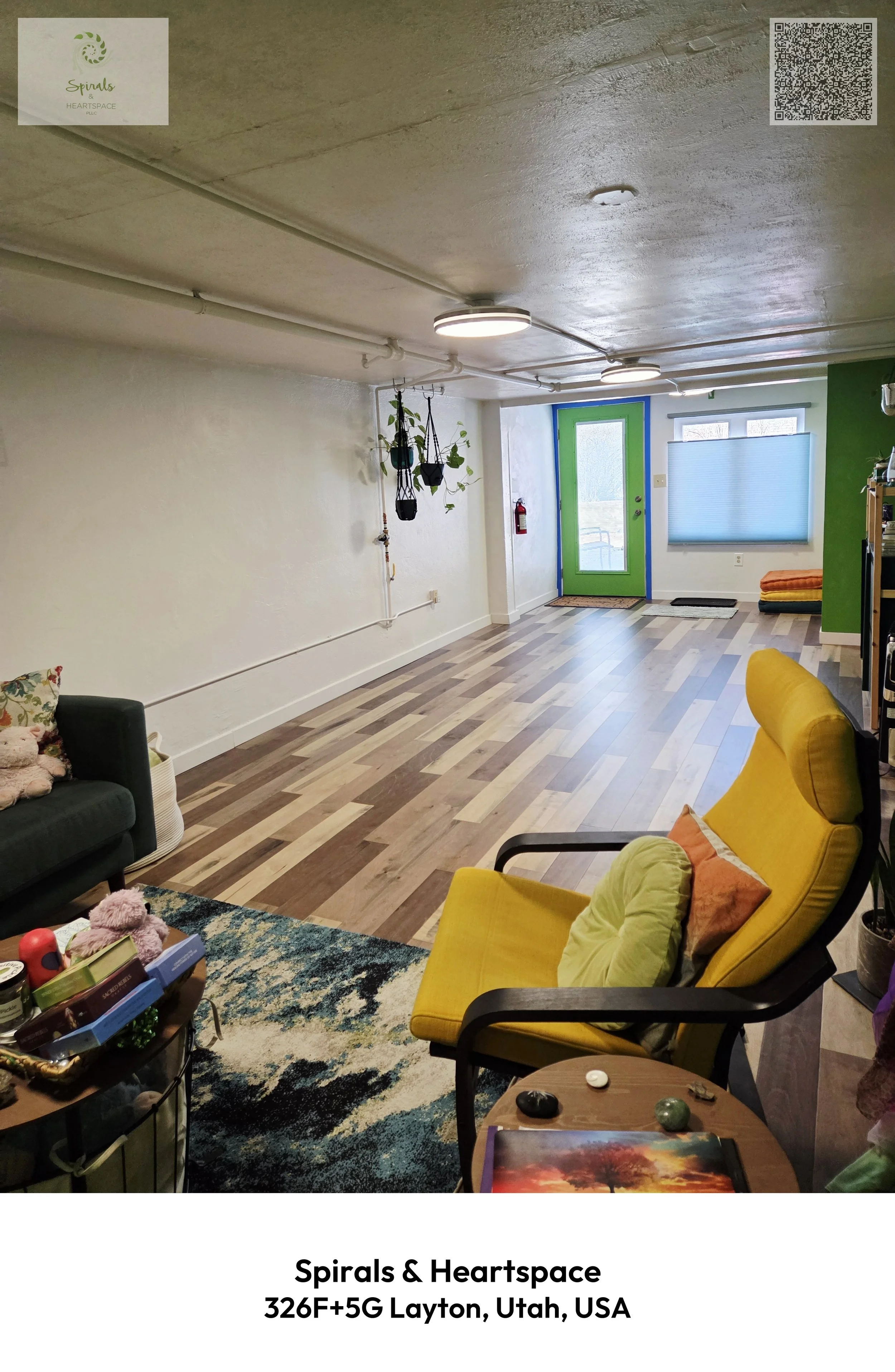
Spirals & Heartspace
Name: Spirals & Heartspace
Address: 534 W Gentile St, Layton, UT 84041
Phone: (385) 301-5252
Website: https://spiralsandheartspacehealing.com/
Hours:
Sunday: Closed
Monday: 9:30 AM – 7:00 PM
Tuesday: 9:30 AM – 7:00 PM
Wednesday: 9:30 AM – 7:00 PM
Thursday: 9:30 AM – 7:00 PM
Friday: 9:30 AM – 7:00 PM
Saturday: Closed
Open-location code / plus code: 326F+5G Layton, Utah, USA
Coordinates: 41.0604503, -111.9762128
Map/listing URL: https://www.google.com/maps/place/Spirals+%26+Heartspace/@41.0604503,-111.9762128,766m/data=!3m2!1e3!4b1!4m6!3m5!1s0x875303311f1d4d1b:0xc6859e5e3fceafe2!8m2!3d41.0604503!4d-111.9762128!16s%2Fg%2F11x781dbvb
Embed iframe:
Socials:
Instagram: https://www.instagram.com/spiralsheartspace/
LinkedIn: https://www.linkedin.com/company/spirals-and-heartspace-pllc
TikTok: https://www.tiktok.com/@spiralsheartspace
X: https://x.com/SpiralsHea61786
YouTube: https://www.youtube.com/@SpiralsHeartspace
The practice is led by Ande Welling, a licensed clinical mental health counselor with training in dance/movement therapy, somatic work, EMDR, trauma care, relational neuroscience, and embodied attachment.
Listed services include therapy, coaching, consultation, authentic movement, trauma therapy, somatic therapy, grief counseling, movement therapy, and attachment therapy.
The practice serves adults who want a deeper body-aware approach to trauma, anxiety, depression, grief, burnout, self-abandonment, family patterns, and relationship wounds.
Spirals & Heartspace offers both in-person sessions in Layton and online therapy for clients in Utah.
The practice is locally positioned for clients in Layton, Kaysville, Farmington, Syracuse, Clearfield, Clinton, Roy, Ogden, Bountiful, Davis County, and nearby northern Utah communities.
The office is listed at 534 W Gentile St in Layton, with public listing hours Monday through Friday from 9:30 AM to 7:00 PM.
Prospective clients can call (385) 301-5252 or visit https://spiralsandheartspacehealing.com/ to ask about consultation options, session fit, and scheduling.
The public map listing for Spirals & Heartspace can help clients verify the Gentile Street office before planning an in-person appointment.
Popular Questions About Spirals & Heartspace
What is Spirals & Heartspace?
Spirals & Heartspace is a Layton, Utah psychotherapy and coaching practice offering somatic, trauma-focused, expressive arts, movement-based, and attachment-informed support for adults.
Who is the therapist at Spirals & Heartspace?
The official site identifies Ande Welling as the therapist, coach, movement facilitator, and guide behind Spirals & Heartspace. Listed credentials include LCMHC, BC-DMT, NCC, GL-CMA, BSE, EMDR Trained, and CCTP-II.
Where is Spirals & Heartspace located?
The matching public listing and LinkedIn profile list the address as 534 W Gentile St, Layton, UT 84041.
Does Spirals & Heartspace offer online therapy?
Yes. The official FAQ states that therapy is available in person or through a HIPAA-compliant telehealth platform for clients who live in Utah.
What services does Spirals & Heartspace provide?
Listed services include therapy, coaching, consultation, authentic movement, trauma therapy, somatic therapy, grief counseling, movement therapy, and attachment therapy.
What makes somatic therapy different from traditional talk therapy?
The official Layton page explains that somatic therapy works with body sensations, movement, and physical experience because trauma and emotional patterns can be held in the nervous system, not only in thoughts.
Do clients need dance experience for movement therapy?
No. The official Layton FAQ says no dance training or special physical ability is required, and that movement therapy uses a client’s natural capacity for movement to access emotions and process experiences.
Does Spirals & Heartspace accept insurance?
The official FAQ says the practice does not take insurance directly, but may provide superbills or bill for out-of-network benefits when applicable. Clients should confirm current reimbursement options directly before scheduling.
What are Spirals & Heartspace’s listed hours?
The matching public listing shows Monday through Friday from 9:30 AM to 7:00 PM, with Saturday and Sunday closed. Appointment availability should be confirmed directly.
How can I contact Spirals & Heartspace?
Call (385) 301-5252, visit https://spiralsandheartspacehealing.com/, or use the listed social profiles: https://www.instagram.com/spiralsheartspace/, https://www.linkedin.com/company/spirals-and-heartspace-pllc, https://www.tiktok.com/@spiralsheartspace, https://x.com/SpiralsHea61786, and https://www.youtube.com/@SpiralsHeartspace.
Landmarks Near Layton, UT
Spirals & Heartspace is located on West Gentile Street in Layton, Utah, with in-person therapy available locally and online therapy available for Utah residents. Clients near these landmarks can call (385) 301-5252 or visit https://spiralsandheartspacehealing.com/ to ask about somatic therapy, trauma therapy, movement therapy, grief counseling, attachment therapy, and consultation options.
- 534 W Gentile St — The listed office address for Spirals & Heartspace; clients can use the map listing to verify the office before visiting.
- West Gentile Street — The local street connected with the practice’s Layton office location.
- Downtown Layton — A practical local reference point for clients navigating central Layton.
- Layton Hills Mall — A major Layton shopping landmark and useful orientation point for clients traveling through the city.
- Interstate 15 near Layton — A major northern Utah route that helps clients reach Layton from nearby Davis County communities.
- Layton FrontRunner Station — A transit landmark for clients traveling by commuter rail through Davis County.
- Ellison Park — A local park and community landmark in Layton.
- Great Salt Lake Shorelands Preserve — A major natural landmark west of Layton and a recognizable Davis County destination.
- Hill Air Force Base — A major regional landmark near Layton and Clearfield.
- Kaysville — A nearby Davis County city listed in the practice’s surrounding service area.
- Farmington — A nearby Davis County community included in the broader local service-area language.
- Ogden — A nearby northern Utah city; clients can ask whether online Utah therapy or in-person Layton sessions are the best fit.