Attachment Therapy and Trust Building: From Fear to Safety
The first minutes of therapy often set the tone. A new client scans the room, clocking the chairs, the tissue box, the small plant by the window. I watch their breath, the way their shoulders hold, whether they choose the corner seat. Fear is usually quiet, more posture than proclamation. In attachment therapy we are listening for the small tremors as much as the big stories, because fear lodged in the nervous system rarely announces itself in complete sentences.
People arrive with different labels: anxious, avoidant, disorganized, secure but stressed. Underneath, the common thread is how the nervous system learned to expect other people. If early care felt inconsistent or frightening, the body learned vigilance and withdrawal. If it felt attuned and responsive, the body learned rest and reach. Therapy from fear to safety asks us to attend to both the story and the physiology. It asks the therapist to be steady, transparent, and human.
What attachment injuries look like in adult life
Attachment injuries rarely appear as a single symptom. They show up in the pauses before answering, in the apologizing for having needs, in the quick smile that covers panic. Some clients step in close, craving reassurance then doubting it a minute later. Others keep their distance, keen to preserve independence even when loneliness is unbearable. The disorganized pattern is the most volatile, where closeness and threat blur, and the person feels hijacked by extremes.
In adult relationships these patterns can look like texting someone 40 times in a morning, or not replying for three days despite wanting to, or testing a partner with subtle provocations. At work the same dynamics surface. A manager reads a neutral email as rejection, or a talented contributor self-sabotages after praise. None of this means someone is broken. It means their system is doing its best with the map it drew early on. Our job in therapy is to help them redraw that map while staying oriented to real life, not turning healing into a second job that crowds out living.
Safety first, not as a slogan but a practice
Safety in therapy is not a feeling we demand from clients. It is a mutual construction. I make the frame explicit on day one: how scheduling works, what happens if I am sick, how to reach me between sessions, what I do with notes, how we handle emergencies. Clear boundaries reduce guesswork, which reduces arousal. Surprise is the enemy of trust for many nervous systems. I also explain my stance on pacing. We will not sprint toward traumatic memories. We will find a speed that allows both contact and containment.
I watch tolerance windows closely. When I see pupils dilate, hands go cold, or language become flat and fast, we slow down. I am a fan of naming state. You look far away right now. Can we locate you together, even while we keep a gentle touch on this story? Naming what the body is doing is a form of respect. It also reduces shame. People believe they are failing therapy when their body reacts. The opposite is true. The body is the data.
If you come from a background where adults were unpredictable, any change in our therapy rhythm can feel like betrayal. I put my breaks on the calendar months ahead, and I remind clients as the date approaches. Consistency is not rigidity. It is a platform for flexibility. When someone learns that we can adjust without the relationship collapsing, their system loosens its grip.
Working with the body so the mind can rest
Somatic therapy is not a gimmick. It is an acknowledgement that our autonomic nervous system learns patterns long before we have words. A client once said, My brain knows my partner loves me, but my stomach has not received the memo. In sessions I often start with breath, but not deep breaths on command. For some bodies, big inhales spike anxiety. Instead we extend exhales, or we orient by turning the head slowly to see the corners of the room. Looking to the periphery, tracking edges, tells the midbrain there is no predator. It sounds simple. It works more often than not.
Movement therapy can be woven into standard talk therapy without fanfare. I have done sessions while walking a quiet loop outside the office for clients who feel trapped in chairs. One man who dreaded conflict at home practiced short sequences with me: standing up, placing a hand on the back of a chair, feeling his feet, then speaking one sentence out loud. Five minutes of that sequence, twice a day, changed the way he entered disagreements. The body rehearsed not just the words but the posture of staying.
There is a place for more formal somatic protocols, too, such as pendulation, resourcing, and titration, borrowed from trauma therapy. Pendulation means moving gently between activation and calm so the nervous system learns it can return. Resourcing means calling on sensations or images that evoke steadiness, like the feeling of a weighted blanket or the sound of ocean waves. Titration means taking tiny doses of difficult material. These are not magic, they are reps in a new gym.
Attachment therapy in session: earned security is a relationship, not a worksheet
Attachment therapy focuses on the here-and-now bond between therapist and client. We study the micro-moments. When I am five minutes late and do not name it, does the client swallow anger or joke? When I offer a compliment, does their gaze drop, then their foot start to tap? When they cancel, do they punish themselves and ghost me for two weeks? These are not tangents. They are the terrain.
Rupture and repair is the core muscle. A rupture is any moment where connection feels broken. That could be as small as me misunderstanding a story, or as big as a holiday break the client experiences as abandonment. Repair means we name it, examine our parts, and try again. The repeated experience of a relationship surviving stress rewires expectation. People do not need perfect attunement. They need reliable repair.
I avoid using attachment labels as identity badges. I might say, Right now an anxious strategy is running, or I notice an avoidant move, rather than You are anxious or You are avoidant. That keeps the focus on strategies that can change. I also build personalized experiments. For an avoidant-leaning client, we might ask them to send a factual text to a friend each morning for a week, then track their somatic response without interpreting it. For an anxious-leaning client, we might wait 15 minutes before sending a reassurance-seeking message, using that quarter hour to practice self-soothing. The point is not to suppress need. It is to widen choice.
Trauma therapy and attachment: braided, not competing
Attachment work often sits inside broader trauma therapy. If a client has a history of assault, medical trauma, or chronic neglect, we weave attachment-focused care with methods that target traumatic memory networks. Tools like EMDR, parts work, and narrative exposure can be valuable, but only when the groundwork of safety and collaboration is solid. I have seen people pushed into trauma processing before they had enough ballast, and the fallout can be rough. Dissociation spikes, daily function plummets, and the person concludes therapy is dangerous. The sequence matters.
A practical guideline I use is the 70-20-10 split. Roughly 70 percent of early sessions invest in resourcing, education, and alliance, 20 percent touch traumatic material in small, contained ways, and 10 percent is reserved for logistics and planning. That ratio shifts over time. Some clients are ready to increase direct trauma processing after 8 to 12 sessions. Others need several months, especially if their living situation keeps stress high. There is no virtue in hurrying. There is also no virtue in avoiding. We feel for the edge together, and we adjust.
Grief is always in the room
Grief counseling belongs in attachment therapy even when no death is involved. We are often grieving the parent we did not have, the childhood where needs were met without a price, the years we spent armoring. Ambiguous loss is a useful phrase here. Many clients have parents who are alive but unavailable, or kind but fragile, or sober now but not then. Accepting these mixed truths is heavier than it sounds. I sometimes invite clients to write letters they do not send, or to choose a ritual that marks a shift. A candle in the evening for a week. A small stone carried for a month, then returned to a river.

Grief work needs pacing, too. People who learned to be the strong one in their family often need permission to let grief take up space. We might dedicate the last 10 minutes of a session to a song that opens feeling, then close with https://jsbin.com/?html,output grounding so they can drive safely. We can also recruit the body here. Tears are not just water, they are a parasympathetic event. If crying feels unsafe, we can start with a different outlet, like humming or light shaking in the legs.
Micro-skills that build trust
Trust accumulates in grams, then suddenly it weighs a pound. In my practice, a few consistent moves change the slope of the curve.
- Make the implicit explicit: say what you are doing and why, from note-taking to pauses.
- Track state out loud: name activation, numbing, or confusion without pathologizing it.
- Offer choice often: ask permission to shift topics, try an exercise, or stay with silence.
- Repair quickly: if you miss, say you missed, then ask what would help right now.
- Keep time and boundaries: start and end on time, disclose thoughtfully, return calls as promised.
These are small behaviors, but they are not small to a nervous system that expects inconsistency.
Movement as co-regulation
The nervous system loves rhythm. A steady pace of steps, the sway of standing, a consistent breath cadence, these are ancient signals. In couples therapy I sometimes invite both partners to sit back-to-back for a minute, then breathe so that their spines feel the other’s rhythm. No words at first. Afterward we talk about what their bodies learned. Many report surprise at how much steadier it feels to have contact without eye contact. For some, eye contact escalates. Back-to-back becomes a bridge.
In individual sessions, I may bring in simple movements. Pressing palms into the wall to feel force meet force, then letting go. Rocking gently in the chair. Tapping the outside of arms, then the legs, then the chest with a slow tempo. These are not distractions. They teach the body that sensation can rise and fall without catastrophe. Over weeks, people start using these tools at home after a hard call with a parent or a tense team meeting. The point is not to become a guru of self-regulation, it is to give the nervous system just enough help to try a new relational move.
Teletherapy, presence, and practical adjustments
Video sessions can serve attachment therapy well, but they ask for extra attention to cues. I encourage clients to place the camera so I can see shoulders and hands, not just the face. I ask them to have a warm drink or a blanket nearby. If the connection lags, I narrate, I am losing your audio, hold on, so the silence does not land like abandonment. When we discuss heavy topics, I sometimes invite a shared pause to look around the room, even on Zoom, because orienting still works.
For clients living with roommates or in small spaces, confidentiality is real. White noise machines, car sessions parked in safe spots, or short voice messages between meetings can help. Again, explicit agreements beat assumptions. If I need to step away for a second to close a window, I say it. These tiny rituals say, I know your system is tracking everything. I am tracking with you.
Edge cases and adaptations
Not every strategy fits every person. Clients with high avoidance may experience somatic tracking as invasive. We might start by tracking their environment instead, noticing light and shadow, or by using cognitive frames to establish a sense of choice before feeling into the body. Clients with disorganized attachment often have histories of severe trauma. With them we pay particular attention to dual awareness, keeping one foot in the present while glancing at the past. If dissociation is frequent, we co-create signals to pause and return.
Neurodiversity changes the picture. An autistic client may find eye contact uncomfortable and metaphors confusing. So we adjust. More concrete language, written summaries after sessions, and sensory-aware grounding, like weighted lap pads or noise control. ADHD can make consistent practice hard. We design micro-interventions that take 30 seconds. Two breaths at red lights. A single text template for reaching out. Cultural context matters, too. In some families, direct talk about needs violates norms. We work on bilingual strategies, one for the family field and one for the self, honoring both.
Medication is a frequent question. SSRIs or anxiolytics can lower baseline arousal so that therapy is more accessible. They do not replace attachment work, but they can make it possible. I collaborate with prescribers and keep an eye on the whole picture. If a new prescription flattens affect to the point that grief cannot surface, we talk about it openly and adjust.
How we know it is working
Progress is not a straight line. Still, there are markers that show up across clients. Sleep improves from five fractured hours to six or seven steadier ones. The stomach ache before a difficult conversation drops from an 8 to a 4 on a 0 to 10 scale. The time it takes to return after a rupture in a relationship shrinks from days to hours. People report fewer tests and more direct asks. Self-criticism softens. They start to tell stories in the present tense without shaking.
More formal measures can help. I sometimes use brief check-ins every month: How safe do you feel in this relationship, 0 to 10? How much can you sense your body, 0 to 10, not as a scorecard but as a way to notice trends. We also track behaviors. How many times did you cancel on friends this month? How many times did you reach out when you wanted to hide? Numbers are not the whole truth, but they can cut through fog.
In terms of timeframes, a lot of clients feel a shift in weeks 6 to 10, when routines have set in and the first or second repair has held. More significant changes in relational patterns often take months. I have seen clients build earned security over a year of steady work, sometimes longer if their environment keeps pressing old buttons. Frequency matters. Weekly sessions create momentum. Biweekly can work if life is stable and the client practices between sessions.
When therapy itself destabilizes
Good therapy is not always comfortable. Sometimes touching an old wound wakes the whole system. Sleep gets worse for a bit. Irritability rises. If I think therapy is the cause, I do not hide. We name it. We scale back. Maybe we swap trauma processing for resource building for a while. Maybe we extend sessions to 75 minutes for a month to allow a full arc from activation to calm. Maybe we bring in a consultation to check our approach. This is not failure. It is the work.
Ruptures with me count, too. I once misunderstood a client’s silence as consent and moved ahead with an exercise they did not want. They went along, then felt resentful. When they told me, my stomach dropped. I apologized, owned the assumption, and we spent time rebuilding explicit check-ins. That episode became a blueprint for them to voice preferences in other relationships. Repair builds muscle even when the therapist is the one who slipped.
The role of grief counseling inside attachment work
As the nervous system starts to trust, grief arrives more clearly. People notice what they missed. They look at their current relationships with new eyes. Grief counseling here means making room for sadness without turning it into a project. We might set aside a weekly window where they allow missing and longing to surface, then they return to daily life. We practice flexible proximity with family members who are still unreliable. One client visited her father monthly, an hour at a time, at a coffee shop instead of his chaotic house. She cried at home afterward. That blend of contact, boundary, and grief moved her forward more than cutting him off or diving in would have.
Ritual helps. A simple practice like writing the names of people who were not safe on slips of paper, placing them in a box, then closing it before bedtime each night for a week gives the body a closure cue. We revisit the box in session, not to dramatize but to mark that memory can be held rather than flooded.
Support from partners and friends
Attachment patterns shift faster with safe people outside therapy. I often coach loved ones who ask how to help without rescuing. A few principles go a long way.
- State your care plainly and briefly, then hold steady if it is doubted.
- Offer choices with limits rather than open-ended fixes.
- Signal departures and returns, even small ones, to reduce surprise.
- Welcome repair attempts, and make your own without defensiveness.
- Respect no as information, not a personal slight.
These are not complicated, but they require stamina. Loved ones need support, too. I encourage them to have their own spaces for venting and grounding so the relationship does not carry everything.
The long arc from fear to safety
At its best, attachment therapy helps people learn that closeness does not require self-erasure, and autonomy does not require exile. Trauma therapy, somatic therapy, movement therapy, and grief counseling are not separate silos. They are strands of one rope. The rope holds when sessions are human and disciplined, when the therapist stays curious, when the client’s nervous system is treated as an ally that needs new experiences to update its file system.
What does safety feel like at the end of a course of therapy? It feels like taking a breath before answering and noticing that your shoulders drop without effort. It feels like texting a partner, I need 10 minutes, and believing the relationship will still be there when you return. It feels like being able to look at a family photo and feel both warmth and pain without splitting. It feels like the plant in the office growing leaf by leaf, slow enough that you do not see it daily, obvious when you look back.
Not every week will feel like progress. Some will feel like trudging. But attachment therapy values the ordinary, not just the breakthroughs. The ritual of showing up, the calendar with your therapist’s vacation marked, the small apology that happens sooner this time, these are how the nervous system learns a new story. From fear to safety is not a leap. It is a series of practiced reaches, met consistently enough that the body eventually believes, then remembers.
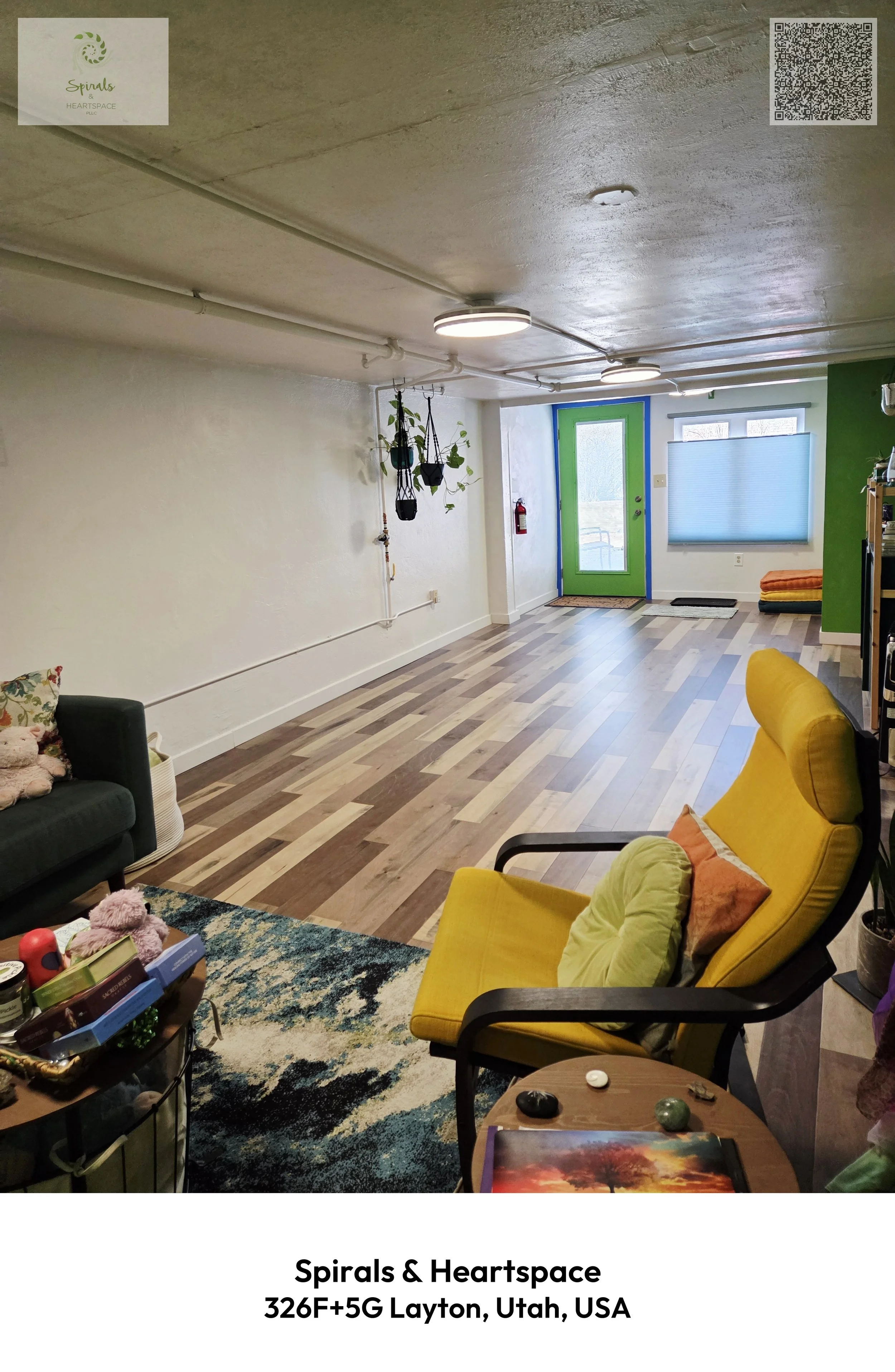
Spirals & Heartspace
Name: Spirals & Heartspace
Address: 534 W Gentile St, Layton, UT 84041
Phone: (385) 301-5252
Website: https://spiralsandheartspacehealing.com/
Hours:
Sunday: Closed
Monday: 9:30 AM – 7:00 PM
Tuesday: 9:30 AM – 7:00 PM
Wednesday: 9:30 AM – 7:00 PM
Thursday: 9:30 AM – 7:00 PM
Friday: 9:30 AM – 7:00 PM
Saturday: Closed
Open-location code / plus code: 326F+5G Layton, Utah, USA
Coordinates: 41.0604503, -111.9762128
Map/listing URL: https://www.google.com/maps/place/Spirals+%26+Heartspace/@41.0604503,-111.9762128,766m/data=!3m2!1e3!4b1!4m6!3m5!1s0x875303311f1d4d1b:0xc6859e5e3fceafe2!8m2!3d41.0604503!4d-111.9762128!16s%2Fg%2F11x781dbvb
Embed iframe:
Socials:
Instagram: https://www.instagram.com/spiralsheartspace/
LinkedIn: https://www.linkedin.com/company/spirals-and-heartspace-pllc
TikTok: https://www.tiktok.com/@spiralsheartspace
X: https://x.com/SpiralsHea61786
YouTube: https://www.youtube.com/@SpiralsHeartspace
The practice is led by Ande Welling, a licensed clinical mental health counselor with training in dance/movement therapy, somatic work, EMDR, trauma care, relational neuroscience, and embodied attachment.
Listed services include therapy, coaching, consultation, authentic movement, trauma therapy, somatic therapy, grief counseling, movement therapy, and attachment therapy.
The practice serves adults who want a deeper body-aware approach to trauma, anxiety, depression, grief, burnout, self-abandonment, family patterns, and relationship wounds.
Spirals & Heartspace offers both in-person sessions in Layton and online therapy for clients in Utah.
The practice is locally positioned for clients in Layton, Kaysville, Farmington, Syracuse, Clearfield, Clinton, Roy, Ogden, Bountiful, Davis County, and nearby northern Utah communities.
The office is listed at 534 W Gentile St in Layton, with public listing hours Monday through Friday from 9:30 AM to 7:00 PM.
Prospective clients can call (385) 301-5252 or visit https://spiralsandheartspacehealing.com/ to ask about consultation options, session fit, and scheduling.
The public map listing for Spirals & Heartspace can help clients verify the Gentile Street office before planning an in-person appointment.
Popular Questions About Spirals & Heartspace
What is Spirals & Heartspace?
Spirals & Heartspace is a Layton, Utah psychotherapy and coaching practice offering somatic, trauma-focused, expressive arts, movement-based, and attachment-informed support for adults.
Who is the therapist at Spirals & Heartspace?
The official site identifies Ande Welling as the therapist, coach, movement facilitator, and guide behind Spirals & Heartspace. Listed credentials include LCMHC, BC-DMT, NCC, GL-CMA, BSE, EMDR Trained, and CCTP-II.
Where is Spirals & Heartspace located?
The matching public listing and LinkedIn profile list the address as 534 W Gentile St, Layton, UT 84041.
Does Spirals & Heartspace offer online therapy?
Yes. The official FAQ states that therapy is available in person or through a HIPAA-compliant telehealth platform for clients who live in Utah.
What services does Spirals & Heartspace provide?
Listed services include therapy, coaching, consultation, authentic movement, trauma therapy, somatic therapy, grief counseling, movement therapy, and attachment therapy.
What makes somatic therapy different from traditional talk therapy?
The official Layton page explains that somatic therapy works with body sensations, movement, and physical experience because trauma and emotional patterns can be held in the nervous system, not only in thoughts.
Do clients need dance experience for movement therapy?
No. The official Layton FAQ says no dance training or special physical ability is required, and that movement therapy uses a client’s natural capacity for movement to access emotions and process experiences.
Does Spirals & Heartspace accept insurance?
The official FAQ says the practice does not take insurance directly, but may provide superbills or bill for out-of-network benefits when applicable. Clients should confirm current reimbursement options directly before scheduling.
What are Spirals & Heartspace’s listed hours?
The matching public listing shows Monday through Friday from 9:30 AM to 7:00 PM, with Saturday and Sunday closed. Appointment availability should be confirmed directly.
How can I contact Spirals & Heartspace?
Call (385) 301-5252, visit https://spiralsandheartspacehealing.com/, or use the listed social profiles: https://www.instagram.com/spiralsheartspace/, https://www.linkedin.com/company/spirals-and-heartspace-pllc, https://www.tiktok.com/@spiralsheartspace, https://x.com/SpiralsHea61786, and https://www.youtube.com/@SpiralsHeartspace.
Landmarks Near Layton, UT
Spirals & Heartspace is located on West Gentile Street in Layton, Utah, with in-person therapy available locally and online therapy available for Utah residents. Clients near these landmarks can call (385) 301-5252 or visit https://spiralsandheartspacehealing.com/ to ask about somatic therapy, trauma therapy, movement therapy, grief counseling, attachment therapy, and consultation options.
- 534 W Gentile St — The listed office address for Spirals & Heartspace; clients can use the map listing to verify the office before visiting.
- West Gentile Street — The local street connected with the practice’s Layton office location.
- Downtown Layton — A practical local reference point for clients navigating central Layton.
- Layton Hills Mall — A major Layton shopping landmark and useful orientation point for clients traveling through the city.
- Interstate 15 near Layton — A major northern Utah route that helps clients reach Layton from nearby Davis County communities.
- Layton FrontRunner Station — A transit landmark for clients traveling by commuter rail through Davis County.
- Ellison Park — A local park and community landmark in Layton.
- Great Salt Lake Shorelands Preserve — A major natural landmark west of Layton and a recognizable Davis County destination.
- Hill Air Force Base — A major regional landmark near Layton and Clearfield.
- Kaysville — A nearby Davis County city listed in the practice’s surrounding service area.
- Farmington — A nearby Davis County community included in the broader local service-area language.
- Ogden — A nearby northern Utah city; clients can ask whether online Utah therapy or in-person Layton sessions are the best fit.